
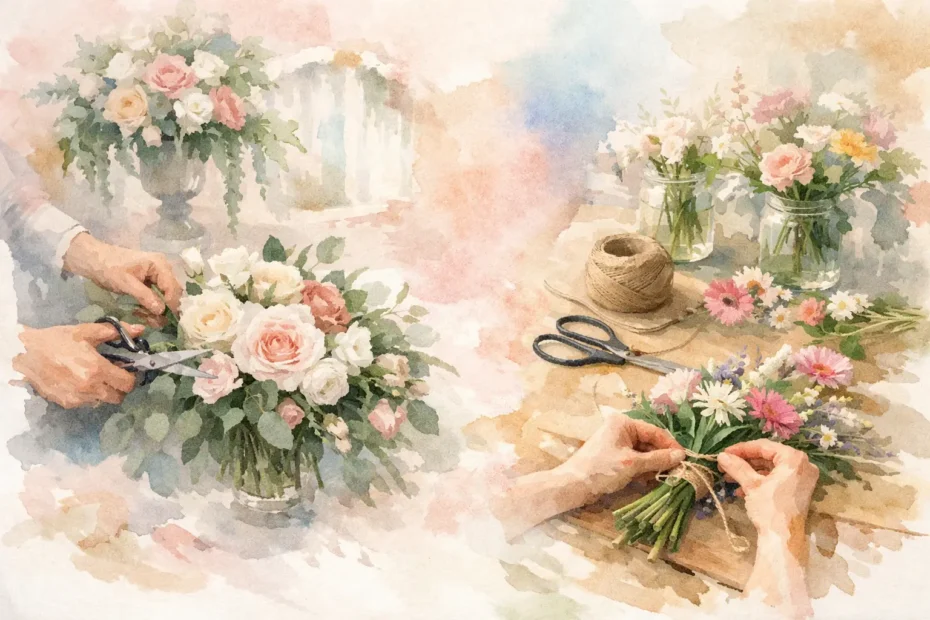
The flowers usually become real at 11:30 p.m. the night before the wedding, when someone is standing over buckets in a kitchen or garage wondering why the roses look smaller than they did online. That is the heart of the wedding florist versus DIY flowers decision. It is not only about price. It is about time, design confidence, logistics, and how you want to feel in the final days before your celebration.
For some couples, DIY flowers are a meaningful, hands-on part of the story. For others, professional floral design brings relief, cohesion, and a level of beauty that lets the entire event exhale. Neither path is automatically right. The best choice depends on your priorities, your support system, and how detailed your floral vision really is.
Wedding florist versus DIY flowers: what are you really comparing?
At first glance, the comparison seems simple. A florist costs more up front, and DIY appears more budget-friendly. But wedding flowers are not a single purchase. They are design planning, sourcing, processing, conditioning, timing, mechanics, transport, setup, and often teardown.
When you hire a wedding florist, you are paying for more than blooms. You are bringing in someone who understands scale, seasonality, color balance, flower behavior, venue styling, and how to create arrangements that hold up through a full day of celebration. You are also paying for decision support. That matters more than many couples expect.
DIY flowers, by contrast, can reduce labor costs and give you more direct control over every stem. If you love creative projects, have a flexible vision, and have people who can truly help, not just cheer you on, this route can be rewarding. It can also become surprisingly demanding once your Pinterest board meets delivery windows, hydration needs, and the fact that flowers are perishable.
When DIY flowers can make sense
DIY is often a lovely fit for smaller weddings with simpler floral needs. If you want a few bouquets, bud vases on reception tables, and maybe greenery accents for a casual setting, doing it yourself may feel manageable. It also works better when your floral style is intentionally organic and unfussy, where a little natural variation adds charm rather than causing stress.
It can also be the right choice if flowers are not the visual centerpiece of your event. Some couples care more about photography, food, music, or fashion and simply want fresh, pretty florals without layered installations or statement pieces. In that case, simple DIY arrangements may align with the overall plan.
There is also the emotional side. Sometimes family members want to help create something personal, and flower arranging becomes part of the celebration itself. If you have a creative circle and realistic expectations, that can be very sweet.
Still, DIY works best when the scope is genuinely small. A bouquet and ten centerpieces are one thing. Personal flowers, ceremony décor, sweetheart table arrangements, aisle markers, welcome display florals, and repurposed reception designs are something else entirely.
Where DIY flowers get harder than expected
Fresh flowers are beautiful because they are alive. That also makes them unpredictable. They need proper hydration, storage, trimming, conditioning, and timing. Some varieties open too fast. Some arrive tight and need time. Some bruise easily. Some simply do not look the way you imagined in your palette.
Then there is volume. Wedding flowers can look deceptively simple in photos, but even a modest wedding often requires more stems, more vessels, and more assembly time than couples expect. A centerpiece that looks effortless may involve multiple flower varieties, mechanics to hold shape, and careful placement to read well in the room.
The biggest hidden cost is usually not money. It is energy. The last two days before a wedding are already full of moving parts. If you choose DIY, someone has to receive the flowers, prep them, arrange them, keep them cool, transport them safely, and place everything on site. That someone is often the couple, a parent, or a friend who was hoping to spend that time getting ready, hosting out-of-town guests, or simply being present.
For suburban Chicago weddings, season and weather can add another layer. Heat, humidity, and transport time matter. A bouquet built in an air-conditioned house can behave very differently after travel, setup, and photos outdoors.
What a professional florist brings to the experience
A skilled wedding florist does not just make arrangements. They shape the floral story of the day. That means looking at your dress, venue, tablescapes, candlelight, linens, color palette, and overall mood, then creating designs that feel cohesive rather than scattered.
This is especially valuable if your wedding has multiple spaces or a more elevated aesthetic. Ceremony flowers should feel connected to reception florals. Bridesmaid bouquets should complement the bridal bouquet without competing with it. Centerpieces should suit the table size and allow guests to converse comfortably. These details are subtle, but they change how polished the event feels.
Professional florists also know how to work within a budget honestly. Sometimes couples assume a florist will simply try to upsell, but thoughtful floral design is often about editing well. A florist can guide you toward flowers with the right visual impact, suggest where statement pieces matter most, and recommend where simpler designs still feel beautiful.
There is also peace of mind. When your florist handles delivery and setup, the flowers arrive where they belong, on time, styled for the room, and ready for photographs. You are not assigning cousins to pin boutonnieres or hoping centerpieces survive the drive.
Cost is real, but so is value
The wedding florist versus DIY flowers conversation almost always returns to budget, and that is fair. Flowers are a visible part of the celebration, but they are also temporary, so couples naturally question how much to spend.
DIY can cost less, especially if you choose in-season blooms, keep the recipe simple, and avoid large installations. But DIY is not the same as cheap. You may still need to purchase flowers in larger quantities than expected, along with vases, ribbon, floral tape, buckets, clippers, wire, foam or mechanics, transport supplies, and storage solutions.
A florist may cost more because you are paying for expertise and labor, but that cost includes far more than materials. It includes design planning, ordering, processing, substitutions when needed, production, delivery, setup, and the confidence that the visual pieces of your day are being handled by someone whose job is to make them beautiful.
If your floral vision is detailed, high-touch, or central to the atmosphere of your wedding, the value of professional design often outweighs the savings of doing it yourself.
How to decide which path fits your wedding
The best way to decide is to get honest about three things: complexity, capacity, and priorities.
Complexity means the actual scope of your floral needs. If you only need personal flowers and a handful of simple table pieces, DIY may be realistic. If you want layered reception florals, ceremony décor, color-specific flowers, or a styled backdrop, professional support will likely make the process smoother and the outcome stronger.
Capacity means time, skill, and people. Not people who mean well, but people who can truly help with flower prep, arranging, transport, and setup under pressure. If your wedding week is already full or your family wants to enjoy the celebration rather than work through it, that matters.
Priorities are the emotional part. Do you want flowers to quietly support the day, or do you want them to define the atmosphere? Do you love the idea of creating them yourself, or do you feel tired just imagining one more task? Your answer tells you a lot.
For many couples, there is also a middle ground. You might hire a florist for bridal party flowers, ceremony pieces, and one or two statement designs, then keep reception tables simple with candles or easy bud vases. That approach can protect the most visible moments while easing the overall budget.
At An English Garden Wedding & Event Florals, we often find that couples are not really choosing between expensive and affordable. They are choosing between doing it all themselves and feeling cared for by a design partner who can translate their vision into something graceful, personal, and beautifully finished.
Wedding florist versus DIY flowers for different wedding styles
A black-tie ballroom wedding and a backyard celebration should not be judged by the same floral standard. The more formal and design-driven the event, the more a florist tends to matter. Clean mechanics, balanced proportion, and polished setup become part of the entire guest experience.
On the other hand, a garden shower, intimate ceremony, or relaxed outdoor wedding may welcome a softer, handmade floral look. Even then, the decision should be based on whether the process feels joyful or burdensome.
That is the quiet test. If arranging your own flowers sounds like a happy, meaningful part of your wedding week, DIY may be right for you. If it sounds like one more responsibility between the rehearsal and the vows, it may be worth handing that piece to someone who does this with care every day.
Your wedding flowers should support the feeling of the day, not compete with it. Choose the path that gives you the beauty you want and the breathing room to enjoy it.