
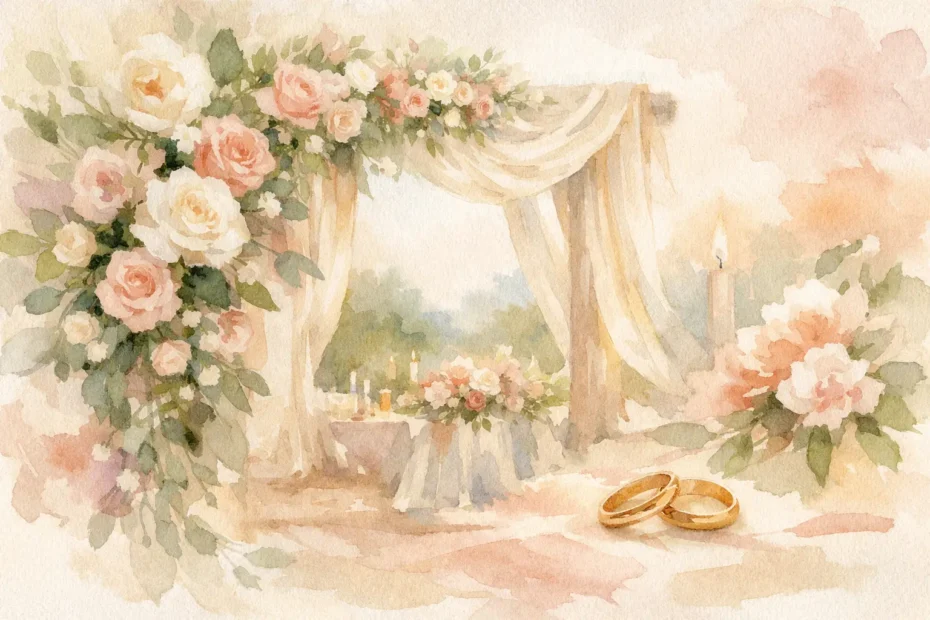
Some couples arrive with a fully saved inspiration board and a clear vision for every bouquet, bud vase, and ceremony arrangement. Others simply know how they want the day to feel – romantic, fresh, garden-inspired, modern, softly colorful, or timeless. The custom wedding floral styling process is designed to meet you in either place and guide your ideas into flowers that feel personal, cohesive, and beautifully considered.
Wedding flowers are not just individual pieces ordered off a menu. They shape the atmosphere of the day. A bouquet should feel right in your hands and in your photographs. Ceremony flowers should frame the moment without distracting from it. Reception florals should help the room feel finished, welcoming, and true to your style. When the design is custom, every floral choice has a purpose.
What the custom wedding floral styling process really means
A true custom floral experience starts with listening. Before anyone decides on specific blooms, there is a bigger story to understand. Your venue, season, color palette, guest count, dress style, table layout, and overall mood all affect the floral direction. So does your personality as a couple.
That is what separates custom styling from simply choosing centerpieces and bouquets from a standard package. Instead of fitting your celebration into a preset formula, the floral design is built around your event. The goal is not to add flowers for the sake of decoration. It is to create visual harmony from the first impression to the final table setting.
For some weddings, that might mean airy, meadow-like florals with movement and a just-gathered feel. For others, it could mean tailored centerpieces, candlelight, and a more structured palette. Neither approach is better. It depends on the setting, the scale of the event, and the story you want the space to tell.
The first conversation sets the tone
The custom wedding floral styling process usually begins with a consultation. This is where ideas start becoming specific. You may discuss your date, venue, ceremony and reception plans, favorite flowers, style preferences, and the pieces that matter most to you.
This stage is part creative discussion and part practical planning. A beautiful floral plan has to work visually, but it also has to work with the flow of your day. A floral arch may be stunning, but the venue layout, setup timing, and repurposing options all matter. A reception filled with lush blooms might be the dream, but the budget may be better spent on a few high-impact areas if that creates a stronger overall result.
That is why good floral planning feels supportive rather than overwhelming. You are not expected to know every flower in season or every installation style available. You are working with a designer who can translate your ideas, refine them, and show you where your investment will have the most impact.
Turning inspiration into a floral concept
Once the vision is understood, design direction becomes more focused. This is the point where inspiration boards, color pairings, flower preferences, and venue details begin to connect. It is less about copying a photo and more about identifying the elements that speak to you.
Maybe you love loose garden roses, trailing greenery, and soft peach tones, but your venue is sleek and contemporary. The right concept may blend those romantic flowers with cleaner vessel choices and more intentional spacing. Maybe you are drawn to dramatic florals, but your ceremony space is already visually ornate. In that case, restraint may create a more elegant result than adding more volume everywhere.
This is one of the most valuable parts of the process. Styling is about editing as much as adding. Custom design means making choices that support the full picture, not just selecting pretty flowers one by one.
How floral selections are made
Flower selection is where many couples expect the process to start, but in reality, it works better when it comes after the overall concept is clear. Specific blooms are chosen based on seasonality, color, texture, durability, and the role each arrangement needs to play.
A bridal bouquet, for example, needs movement, proportion, and flowers that hold up well through photos, travel, and the ceremony. Reception centerpieces have different priorities. They need to read well from across the room, fit the scale of the table, and support conversation instead of blocking it. Ceremony flowers often need visual presence and structural stability, especially if they are outdoors.
There is also room for flexibility. If a favorite bloom is unavailable or does not perform well in a certain season, a custom approach allows for thoughtful substitutions that keep the same feeling. What matters most is preserving the design story, not forcing one exact stem into every arrangement.
The custom wedding floral styling process and your budget
Budget conversations are part of good design, not separate from it. In fact, they are what help shape a floral plan that feels both beautiful and realistic. A strong florist will not treat budget as a limitation alone. It is a tool for prioritizing.
If personal flowers are especially important, more of the investment may go toward bouquets, boutonnieres, and floral pieces that are close to the camera and emotionally significant. If the goal is to transform the reception, the focus may shift toward statement centerpieces, entry arrangements, sweetheart table florals, or suspended installations. If you want a romantic ceremony backdrop but also want value, repurposing those flowers for the reception can be a smart choice.
This is where honesty matters. Not every floral idea carries the same labor, mechanics, and flower cost. Lush aisle meadows, hanging installations, and fully floral arches create a stunning effect, but they require more than stems alone. Knowing that early helps couples make confident choices instead of last-minute compromises.
Designing for the full event, not just the bouquet
One of the most overlooked parts of floral styling is cohesion. Wedding flowers work best when each piece feels connected to the next. That does not mean every arrangement must match exactly. It means they should belong to the same visual family.
Your bridal bouquet might carry the softest and most detailed expression of the design. Bridesmaid bouquets can echo that palette more simply. Ceremony arrangements can expand the same textures and tones on a larger scale. Reception florals can then carry the mood into the room through centerpieces, accent arrangements, candles, and carefully chosen styling details.
This full-picture approach is what makes a wedding feel polished. Guests may not identify every design decision, but they feel the effect. The event feels intentional. The flowers do not look like separate orders placed for different occasions. They feel like one story unfolding throughout the day.
At An English Garden Wedding & Event Florals, that kind of continuity is part of what makes floral design feel so personal. The details are not added randomly. They are chosen to support the atmosphere you want your guests to remember.
Installation day is where planning becomes peace of mind
By the time the wedding day arrives, the floral styling process should feel calm on your side. The planning, revisions, flower sourcing, preparation, transport, and setup logistics happen behind the scenes so you can be present for the moments that matter.
This stage is where dependable service matters just as much as artistic ability. Flowers are delicate, timing is tight, and venues often have specific access windows. Installations need to be placed correctly, personal flowers need to be delivered in excellent condition, and every arrangement needs to look as beautiful in real life as it did in the design plan.
Great execution often goes unnoticed because it feels effortless. That is exactly the point. When floral styling is done well, the day simply looks and feels right.
Why customization creates a more meaningful result
There is nothing wrong with loving a specific trend, and inspiration images can be helpful. But the weddings people remember most are the ones that feel like the couple. Custom floral styling gives you space to create that feeling.
Maybe that means choosing blooms that remind you of a family garden. Maybe it means building a palette around the tone of your invitation suite or the season when you met. Maybe it means balancing elegance with a relaxed, natural look so the wedding feels refined without feeling stiff.
That is the heart of the custom wedding floral styling process. It is not only about flowers. It is about interpretation, care, and design choices that make the celebration feel unmistakably yours.
When you work with a florist as a design partner, you are not just checking arrangements off a list. You are shaping the visual language of the day. And when that process is thoughtful from the beginning, the flowers do more than decorate – they help your story feel beautifully alive.