
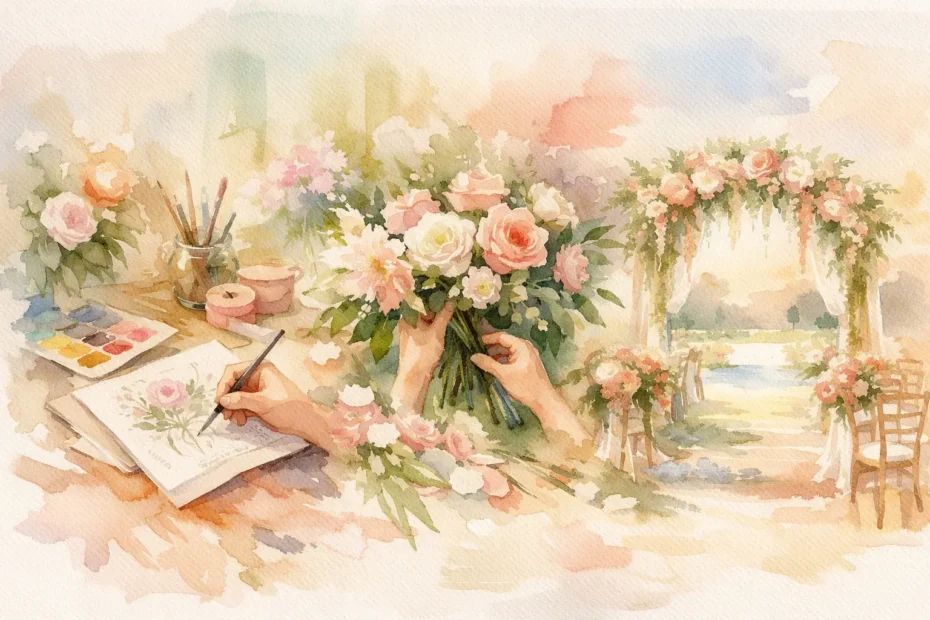
A bridal bouquet rarely begins with flowers. It usually begins with a feeling.
Maybe you want the day to feel soft and romantic, a little wild, beautifully polished, or deeply personal in a way guests cannot quite name but immediately notice. That is how wedding florals work – not as random pretty pieces, but as a thoughtful design story that moves from your bouquet to your ceremony, into your reception, and through every visual moment in between.
For many couples, florals feel mysterious at first. You know you need bouquets and centerpieces, but the pricing, the planning, the seasonal choices, and the difference between “some flowers” and a fully designed floral experience can be harder to see from the outside. Once you understand the process, it becomes much easier to make confident decisions and invest where flowers will have the biggest impact.
How wedding florals work behind the scenes
Wedding flowers are part design service, part logistics, and part craftsmanship. A florist is not simply ordering blooms and placing them in vases. They are helping shape the atmosphere of the day, translating your color palette, venue style, dress details, table design, and personal taste into floral pieces that feel cohesive.
That work usually starts with a consultation. This is where your florist learns what matters most to you. Some couples care most about a show-stopping ceremony backdrop. Others want lush guest tables, romantic personal flowers, or a reception that feels layered and immersive. Your priorities guide the design plan.
From there, the floral design process becomes a balance of aesthetics and practicality. Your florist considers seasonality, flower availability, venue rules, weather, delivery timing, installation needs, and how each arrangement will photograph. Flowers are delicate, but the planning behind them is very structured.
The first step is always the vision
Before stems are selected, the overall look needs to be clear. This does not mean you need a perfect Pinterest board or the names of specific flowers. It means knowing the mood you want your event to hold.
A garden-inspired wedding may call for movement, layered textures, and blooms that feel gathered rather than rigid. A modern celebration might lean toward cleaner lines, intentional negative space, and a more edited palette. Neither approach is better. It depends on your taste, your venue, and the story you want your guests to experience.
A strong florist will ask questions that go beyond flowers. What does your venue already offer visually? Are the ceilings high or low? Will the ceremony and reception happen in the same space? Do you want your flowers to whisper or make a statement? Those details shape where floral design matters most.
This is also where color becomes more nuanced than “blush and white” or “blue and green.” The exact tones matter. Soft ivory reads differently than bright white. Dusty mauve creates a different mood than pink. The right floral palette should work with your linens, attire, lighting, and the season rather than compete with them.
Budget influences more than people expect
When couples ask how wedding florals work, budget is usually the hidden question beneath it. Floral pricing is affected by more than the number of arrangements. It includes flower varieties, labor, mechanics, design complexity, delivery, setup, repurposing, and teardown when needed.
The biggest misconception is that flowers are priced like retail bouquets. Wedding florals are custom event design. Each piece is planned for a specific scale, setting, and lifespan. A bouquet might take careful ingredient selection and detailed handwork. A ceremony installation may require structural support, transportation planning, and onsite construction.
This is why floral budgets work best when they are tied to priorities instead of a giant wish list. If you want drama, decide where it matters most. Sometimes that means investing in a full ceremony statement piece and keeping guest tables more refined. Other times it means focusing on reception centerpieces and simpler personal flowers. Beautiful design is not about putting flowers everywhere. It is about placing them thoughtfully.
Flower selection depends on season, style, and flexibility
Most couples begin with flower types they love, and that is a wonderful starting point. But floral design works best when there is room for interpretation.
Not every bloom is available every month, and even flowers that are technically available can vary in quality, color, or price depending on the season and market conditions. Peonies in late spring feel different from peonies sourced out of season. Garden roses, ranunculus, lisianthus, dahlias, and delphinium all have their own timing, personality, and price range.
A florist often designs by recipe and feeling rather than promising every exact stem months in advance. That flexibility protects the beauty of the final result. If one bloom arrives below standard, an experienced designer can choose another flower with a similar movement, texture, or tone so the arrangement still feels right.
This is where trust matters. Custom florals are not about forcing a copy of a reference image. They are about creating something personal and beautiful for your day, your venue, and the season surrounding it.
Personal flowers and event flowers serve different roles
One of the easiest ways to understand how wedding florals work is to separate them into two categories. Personal flowers are worn or carried, like bouquets, boutonnieres, corsages, and flower crowns. Event flowers shape the space, including ceremony arrangements, cocktail flowers, centerpieces, bar pieces, entry arrangements, and statement installations.
Personal flowers are intimate. They are seen close-up, held in portraits, and tied directly to the people at the center of the celebration. These pieces need to feel comfortable, balanced, and polished from every angle.
Event flowers work more architecturally. They direct the eye, soften a venue, frame important moments, and make a room feel finished. A floral meadow at the altar, an arrangement greeting guests at the welcome table, or candles paired with blooms across a reception table all influence how the event feels as much as how it looks.
The most memorable weddings usually connect these two categories beautifully. The bouquet should feel related to the centerpieces. The ceremony flowers should make sense with the reception design. Cohesion is what makes floral design feel elevated.
Logistics are a huge part of the magic
Flowers are one of the last major elements to arrive on a wedding day, yet they affect nearly every space. That means timing matters.
Your florist is often coordinating around venue access, photography schedules, ceremony start time, room flips, rental placement, and weather. If an arch installation needs to happen before guests arrive but after chairs are placed, that timing has to be precise. If centerpieces include candles, vessels, or layered decor, setup becomes even more detailed.
This is one reason full-service floral design can feel so valuable. It removes a tremendous amount of stress from the couple, the family, and the planner. Rather than handing off buckets of flowers or asking someone to place pieces quickly, your florist handles the installation so the final design reads exactly as intended.
For weddings in the suburban Chicago area, this can be especially important during seasons with unpredictable temperatures. Heat, wind, and cold all affect how flowers perform. Professional handling helps preserve both the look and longevity of the arrangements.
Repurposing can be smart, but it depends
Many couples ask whether ceremony flowers can be moved to the reception. Sometimes yes, and sometimes no.
Repurposing can be a lovely way to extend the life of certain pieces, especially aisle arrangements, entry flowers, or grounded ceremony designs that can later frame a sweetheart table or bar. But it depends on labor, timing, mechanics, and whether the flowers will still look fresh after the move.
There is always a trade-off. Repurposing may save on product costs, but it can add setup labor and require a tight turnaround. In some cases, it is absolutely worth it. In others, designing simpler dedicated pieces for each space creates a smoother result. A florist should be honest about which option makes the most sense for your day.
What couples should bring to a floral consultation
You do not need to arrive with every answer. A few helpful details go a long way: your venue, wedding date, estimated guest count, inspiration images, color palette, and the areas where flowers matter most to you.
It also helps to share what you do not like. If you prefer airy over compact, natural over formal, colorful over neutral, or understated over lavish, say so clearly. Those preferences help shape the design as much as your favorite blooms do.
At An English Garden Wedding & Event Florals, this part of the process is where care and creativity meet. The goal is not to fit your celebration into a package. It is to build floral design around your story, your priorities, and the experience you want to create for everyone in the room.
Wedding flowers work best when they are more than a checklist item. They should support the emotion of the day, make your space feel beautifully intentional, and leave you feeling understood from the first conversation to the final stem placed.
If you are planning your celebration, start with the feeling you want to remember. The flowers can grow from there.