
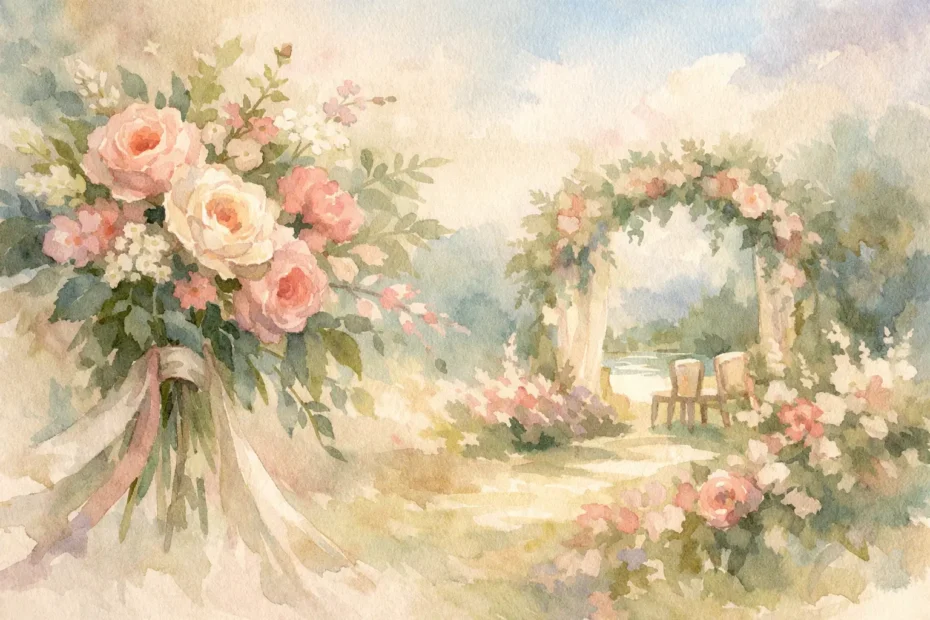
Some wedding flowers look arranged. Others look as if they simply belonged there all along. That is the magic of garden style wedding flowers – they feel gathered, airy, romantic, and full of life, while still being thoughtfully designed for a polished celebration.
For couples planning a wedding in Tinley Park, Frankfort, or the surrounding suburban Chicago area, this style has become especially appealing because it offers something many people want right now: beauty that feels personal rather than overly formal. Garden-inspired florals can soften a ballroom, add warmth to a church ceremony, or make a tented reception feel like an intimate outdoor gathering. They are graceful, but never stiff.
What garden style wedding flowers really mean
Garden style wedding flowers are not just flowers with greenery tucked around them. The style is defined by movement, texture, layered color, and an organic shape that mimics what you might see in a blooming garden. Instead of tight, symmetrical designs, the arrangements usually feel loose, dimensional, and naturally abundant.
That does not mean messy. A well-designed garden style bouquet or centerpiece still requires a trained eye, careful flower selection, and strong floral mechanics. The difference is in the finished feeling. You notice softness, depth, and a sense that each bloom has room to breathe.
This look often includes focal flowers such as garden roses, ranunculus, peonies, lisianthus, and dahlias, paired with textural elements like sweet pea, scabiosa, delphinium, astilbe, hellebore, jasmine vine, or flowering branches. The exact ingredients depend on season, color palette, and budget, but the result should always feel lush and expressive.
Why couples are drawn to this floral style
There is a reason this aesthetic continues to resonate. Garden-inspired florals tell a love story in a softer voice. They do not compete with the moment. They support it.
For many couples, the appeal is emotional as much as visual. A garden-style bouquet can feel more romantic in the hand, more flattering in photographs, and more reflective of a celebration built around connection and meaning. It suggests ease, even though a great deal of planning goes into making it look effortless.
It is also a flexible design choice. Garden florals can lean refined and elegant for a black-tie wedding, fresh and airy for a spring ceremony, or richly textured for a moody fall celebration. The style is broad enough to adapt to your venue and your personality, which is one of the reasons custom floral design matters so much.
Garden style wedding flowers in different wedding settings
One of the strongest qualities of this floral approach is how well it translates across spaces. A historic venue, modern ballroom, country club, private estate, or church can all support this look, but the flowers should be shaped around the setting rather than imposed on it.
In a ballroom, garden florals help bring softness to a structured room. Elevated centerpieces with trailing greenery, flower-forward compote arrangements, and a ceremony backdrop with layered blooms can make the space feel more intimate and romantic.
In an outdoor ceremony, the style feels especially natural, but balance is still important. If the landscape is already visually rich, florals may work best as accents rather than oversized statements. Bouquets, aisle markers, and a thoughtfully designed altar can enhance the setting without overwhelming it.
For church weddings, garden style can be interpreted a bit more classically. Fuller altar pieces, elegant pew markers, and personal flowers with soft movement create a look that feels respectful to the space while still carrying that airy, storybook quality couples love.
Choosing the right flowers for a garden-inspired look
The best garden-style wedding flowers start with seasonality. Not every bloom is available, affordable, or at its best year-round, and trying to force a specific flower out of season can affect both budget and quality.
Spring naturally lends itself to this style with tulips, ranunculus, lilac, sweet pea, and blooming branches. Summer offers garden roses, cosmos, delphinium, lisianthus, and zinnias. Fall brings in dahlias, toffee-toned roses, textural foliage, and richer colors that still suit the garden look beautifully.
Winter can be the trickiest season for a true garden feel, but it is far from impossible. The approach simply shifts. You might use elegant roses, hellebore, anemones, amaryllis, berry tones, or layered neutral textures to create movement and romance without relying on peak summer blooms.
This is where custom guidance matters. A floral designer can help you capture the feeling of a garden without locking you into a rigid recipe.
Color palettes that work beautifully with garden florals
Soft color palettes are often associated with this style for good reason. Blush, ivory, dusty blue, butter cream, and muted lavender all pair beautifully with open, romantic blooms. They create that light, painterly effect many couples picture when they imagine a garden wedding.
But garden style does not have to be pastel. One of the most beautiful things about it is how well it holds complexity. Terracotta, mauve, deep plum, peach, ochre, burgundy, and warm neutrals can all feel distinctly garden-inspired when they are layered with intention.
The key is dimension. A single flat color rarely creates the same natural depth. Garden florals usually shine when the palette includes tonal variation, a few textural accents, and enough contrast to keep the arrangements alive in photos.
The trade-offs couples should know
This style is beloved for a reason, but it helps to go in with clear expectations. Garden-inspired florals often require a wider mix of flower varieties, which can make them more labor-intensive and sometimes more expensive than simpler, tighter designs.
They also rely heavily on flower quality. Because the arrangements are meant to feel open and expressive, each stem has a more visible role. If a bloom is bruised, undersized, or not opening well, it can affect the finished piece more noticeably than it might in a compact arrangement.
There is also the matter of weather. If you are planning an outdoor summer event in the Chicago suburbs, delicate flowers may need special consideration for heat, wind, and timing. A beautiful design is not only about how it looks in a proposal photo. It is about how it performs on the day of your event.
That is why thoughtful floral planning is not a luxury. It is part of protecting your vision.
How to make garden style wedding flowers feel like you
The most memorable weddings are not built from trends alone. They are built from details that feel honest to the couple. Garden florals can be incredibly personal when they reflect your story, your venue, and the atmosphere you want your guests to feel the moment they arrive.
Maybe that means bouquets with a soft, heirloom quality inspired by your grandmother’s garden. Maybe it means a fresh white and green ceremony with a more colorful reception palette. Maybe it means floral meadows at the altar, candlelit centerpieces with loose blooms, or delicate personal flowers that let your dress and setting do the talking.
This is where conversation matters just as much as flower choice. A strong floral design process should leave room for your priorities. If your bouquet is your dream piece, the budget can reflect that. If you want the biggest visual impact in the reception, centerpieces and statement installations may take the lead.
At An English Garden Wedding & Event Florals, that is often where the most beautiful work begins – with listening first, then shaping flowers around the people and celebration they are meant to serve.
A few signs this style is right for your wedding
If you are drawn to movement instead of symmetry, texture instead of uniformity, and flowers that feel romantic rather than rigid, this style may be a natural fit. The same is true if you want your wedding to feel warm, inviting, and visually layered.
It is especially lovely for couples who care about atmosphere. Garden florals do more than decorate tables. They soften rooms, frame meaningful moments, and help the entire celebration feel more alive.
The best part is that the style can be interpreted in a way that suits you. It can be refined or whimsical, lush or understated, classic or a bit untamed. What matters most is not copying a trend photo exactly. It is creating floral design that feels at home in your day.
When flowers are chosen with care and designed with intention, they do more than fill a space. They create a feeling your guests remember long after the last dance.