
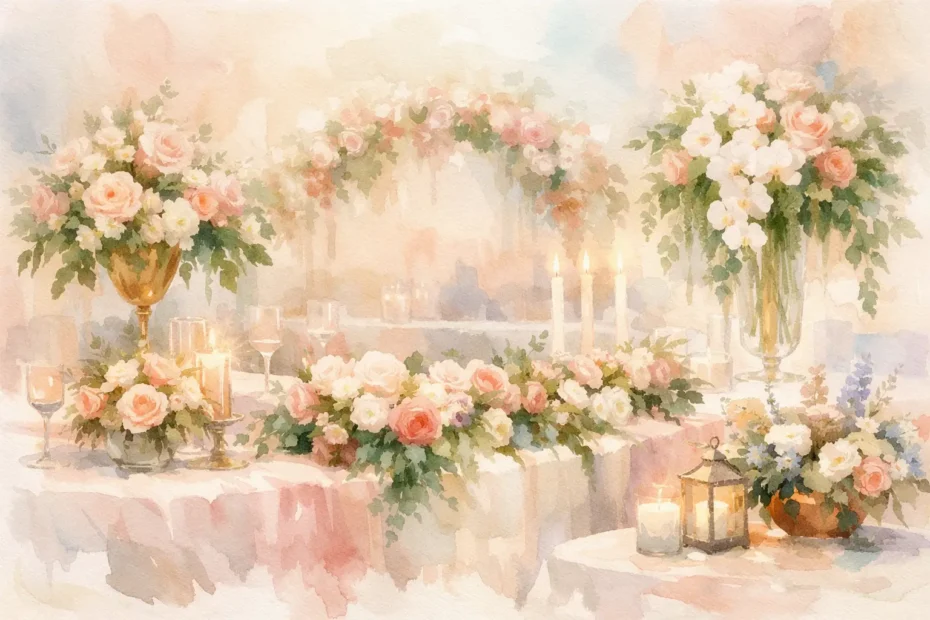
The best reception table flower styles do more than fill the middle of a table. They shape the mood of the room, influence how guests experience the space, and quietly tie every design choice together – from linens and candles to chargers, menus, and the way your photos feel years later.
If you have ever looked at centerpiece inspiration and thought, I love all of it, but what actually works for my wedding, you are asking the right question. A beautiful reception floral design is not just about choosing flowers you like. It is about scale, table shape, venue atmosphere, guest comfort, and the kind of story you want the room to tell.
How to choose the best reception table flower styles
The right style begins with your tables before it begins with your flower list. Long farmhouse tables create a very different floral opportunity than rounds, and a ballroom with high ceilings can carry dramatic height in a way a cozy restaurant reception cannot. What looks soft and airy in one room may feel crowded in another.
Guest experience matters just as much. Some couples love abundant florals, but if arrangements are too wide, too tall, or too scented, they can interfere with conversation and place settings. The best centerpieces feel generous without becoming obstacles. That balance is where thoughtful floral design makes all the difference.
Color palette also changes the effect of a style. A low garden centerpiece in blush and cream reads romantic and timeless. The same silhouette in citrus tones or deep plum feels more modern and expressive. Style is not only shape – it is shape, color, flower variety, vessel, and spacing working together.
Low garden centerpieces
For many couples, this is the most versatile of the best reception table flower styles. Low garden centerpieces sit beneath eye level, making conversation easy while still giving the table a full, polished look. They feel lush, intimate, and welcoming, especially for weddings where connection and shared moments are part of the atmosphere.
This style works beautifully with roses, ranunculus, lisianthus, spray roses, hydrangea, and layered greenery. It can be designed in a tighter classic shape or with a looser garden feel that appears freshly gathered. If your overall vision leans romantic, nature-inspired, or softly elegant, low centerpieces are often the safest and prettiest place to begin.
They are especially lovely on round guest tables because they create a clear focal point without overwhelming each place setting. On long tables, they work best repeated in a series rather than as one oversized arrangement.
Tall statement centerpieces
Tall centerpieces bring drama, movement, and a sense of occasion. In venues with generous ceiling height, they help fill visual space and make the reception feel finished from floor to ceiling. Guests often remember this style because it creates such an immediate impact when they first enter the room.
The trade-off is that height has to be handled carefully. A tall arrangement should rise above seated eye level, not hover awkwardly in the middle where it blocks sightlines. The mechanics, the vessel, and the flower selection all need to feel intentional so the design looks graceful rather than top-heavy.
This style is often a beautiful fit for formal ballroom weddings, black-tie celebrations, and larger receptions where you want the room to feel elevated and layered. It can also be mixed with lower centerpieces for dimension, which keeps the floral plan from feeling too repetitive.
Flower runners for long tables
When couples want the reception to feel abundant and immersive, floral runners are often the answer. Rather than placing one centerpiece in the center of each table, this style allows flowers to flow along the length of the table in a continuous design. The result feels organic, luxurious, and deeply romantic.
Flower runners can be full and lush, or they can be intentionally airy with pockets of blooms, greenery, candles, and negative space. That flexibility is part of their appeal. You can make them feel lavish without necessarily using the same formula across every inch.
This is one of the best reception table flower styles for head tables, sweetheart tables, and family-style receptions with long layouts. It creates beautiful texture in photographs and helps the entire tablescape feel connected. The practical note is budget. Runners usually require more floral material and more installation time than single centerpieces, so they are worth prioritizing where they will have the most visual value.
Bud vase groupings
Bud vase groupings have become popular for good reason. They feel fresh, unfussy, and elegant in a way that suits many different wedding aesthetics. Instead of one large arrangement, several small vessels are clustered together across the table, each holding a few carefully chosen stems.
This style can feel minimal, but it should never feel accidental. The beauty comes from the rhythm of repetition, the mix of bloom sizes, and the way the flowers interact with candles and tableware. Done well, bud vases create a graceful, editorial look that still feels warm.
They are especially useful when you want flowers on the table without a heavy visual footprint. Guests see more of the linens, taper candles, menus, and other details, which can be ideal if your overall event design includes many layered elements. They also adapt well to smaller tables or more intimate venues.
Compote arrangements with layered texture
Compote centerpieces sit in pedestal-style bowls and offer a classic garden party feel with a refined edge. They naturally encourage a slightly elevated, rounded shape that works beautifully with layered blooms and trailing accents.
This style often feels at home in weddings that lean timeless, European-inspired, or softly romantic. It is a lovely choice when you want the centerpiece vessel to contribute to the look, not disappear into it. Ceramic, stone, or antique-inspired compotes can add another layer of personality to the design.
The key with compotes is proportion. Too small, and they can look fussy. Too large, and they can dominate the table. When scaled correctly, they feel abundant without becoming overwhelming.
Minimal mono-bloom designs
Not every floral statement has to be intricate. Sometimes one flower, repeated with confidence, creates the most memorable look in the room. Mono-bloom centerpieces use a single flower variety or a very limited palette to create a clean, intentional effect.
This style can be modern, sculptural, and surprisingly romantic depending on the flower. White tulips, reflexed roses, all-hydrangea arrangements, or clustered orchids each tell a different story. The simplicity lets shape and color do the work.
This approach is ideal for couples who prefer polish over fullness or who want a more contemporary event design. It also pairs beautifully with strong architectural venues, sleek table settings, or bold candlelight. The caution is that minimal design only looks luxurious when the flower quality is excellent and the execution is precise.
Meadow-inspired tablescapes
For couples who want their reception to feel as if nature has gently wandered indoors, meadow-style florals offer a lovely direction. This style uses movement, varied stem heights, and a less structured composition to create something that feels natural, airy, and story-filled.
Meadow-inspired florals often include delicate blooms, textural elements, and seasonal flowers with personality. They are especially beautiful for garden weddings, tented receptions, and celebrations that center softness over symmetry. The feeling is less formal, but not less thoughtful.
Because this style is intentionally loose, it still needs disciplined design. Without that, it can read messy rather than effortless. The right floral balance keeps it poetic and polished.
Mixed-height centerpieces
If you love more than one look, you do not always have to choose a single formula. Mixed-height centerpieces combine taller arrangements with lower ones across the room, creating variation and visual movement. This is one of the best reception table flower styles for larger weddings because it helps the room feel dynamic from every angle.
The success of this approach depends on cohesion. The flowers, vessels, and color palette should clearly belong to the same story, even if the silhouettes vary. When done well, mixed heights keep the design interesting and often allow you to place your budget where it has the strongest effect.
For example, statement arrangements may be placed on select tables or in focal points, while lower pieces fill the remaining guest tables with equal beauty and better conversation flow. It is a practical and artistic solution at the same time.
What style is right for your reception?
There is no single answer to the best reception table flower styles because the best choice depends on your room, your guest count, your tables, and the feeling you want people to carry home with them. A candlelit restaurant wedding may call for low florals and bud vases. A grand ballroom may need tall pieces to feel balanced. A garden-inspired celebration may come alive through floral runners and meadow textures.
The most beautiful receptions are rarely built from trends alone. They come from thoughtful choices that support the people in the room and the story being celebrated. That is why custom floral design matters. It allows the flowers to belong to your event rather than simply decorate it.
When your tables feel inviting, proportioned, and true to your style, guests may not always name the exact floral technique. They will simply feel that the room was beautiful, cared for, and unforgettable – which is exactly what flowers should do.