
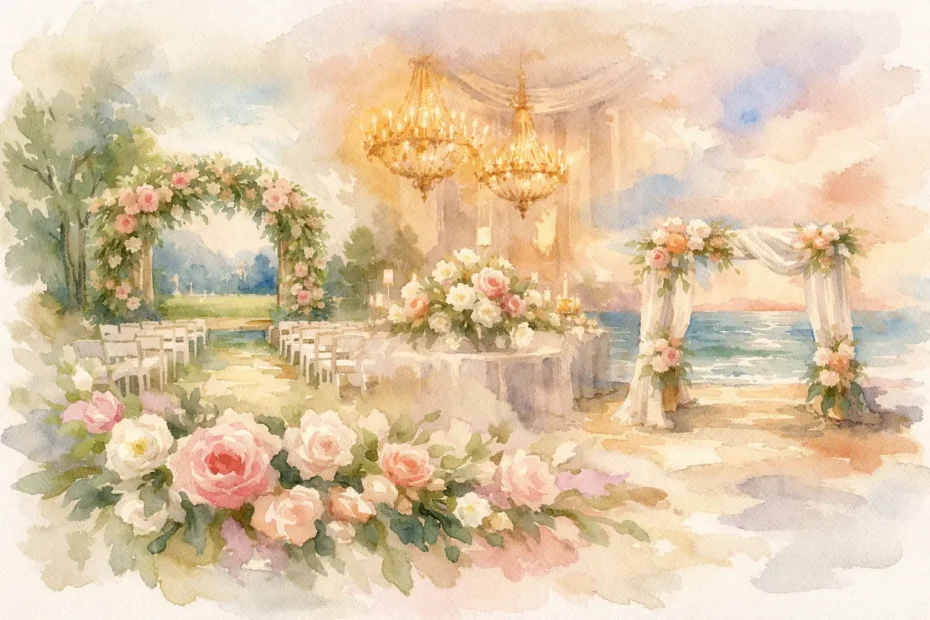
A candlelit ballroom and a sunlit barn do not ask for the same flowers. The most beautiful weddings feel cohesive because the florals belong to the space, not because they follow a trend. If you want to plan wedding flowers by venue, start by looking at what the setting already gives you – architecture, light, color, texture, and scale.
That approach changes everything. Instead of choosing arrangements in isolation, you begin to see how bouquets, ceremony flowers, and reception designs can work together to tell a fuller story. Your venue is not just a backdrop. It is one of the most important design partners in the room.
Why venue should lead your floral plan
Flowers are emotional, but they are also structural. They soften sharp spaces, warm up formal rooms, add romance to industrial settings, and help open-air celebrations feel intentional rather than sparse. A venue already has its own personality, and the goal is not to fight it.
When couples choose florals before thinking through the venue, they often run into a mismatch. Delicate garden centerpieces can disappear in a grand ballroom with tall ceilings. Oversized installations can overwhelm a cozy restaurant wedding. The prettiest floral recipe on paper may not feel right once it is placed in the actual room.
Planning with the venue first helps you decide where flowers will have the most impact. Sometimes that means investing in a ceremony focal point because the reception room is already rich with character. Other times it means keeping personal flowers refined and putting more of the floral budget into large-scale reception pieces that bring balance to a simpler space.
How to plan wedding flowers by venue style
Every venue asks different things of your floral design. The right plan considers both the beauty of the space and the practical realities of setup, movement, and guest experience.
Ballrooms and formal banquet spaces
Ballrooms usually offer height, symmetry, and a polished atmosphere. Crystal chandeliers, draping, mirrors, and neutral carpeting can create a classic canvas, but they can also make low-profile florals feel visually small.
In a ballroom, scale matters. Taller centerpieces, elevated ceremony flowers, and fuller designs often feel at home because the room can carry them. If your venue has a dramatic entrance, staircase, or head table wall, those areas are often worth floral attention because they naturally draw the eye.
Color also behaves differently in formal venues. Soft blush and ivory can be timeless, but in darker rooms they may need greenery, candlelight, or a touch of richer tone to avoid feeling washed out. If your ballroom already has gold accents or strong carpet patterns, your florist may recommend a more edited palette so the room and flowers complement each other instead of competing.
Barns and rustic venues
Barn weddings tend to offer warmth, texture, and architectural character from the start. Wood beams, open ceilings, and outdoor ceremony options create a relaxed romantic setting, which is one reason florals with movement do so well here.
This is a lovely place for garden-style arrangements, trailing greenery, meadow-inspired ceremony pieces, and flowers that feel gathered rather than rigid. That said, rustic does not have to mean casual. A barn can absolutely support elevated floral design, especially when you use flowers to add softness and refinement to the wood and metal textures already present.
The trade-off is that barn spaces can be visually busy. If there are lots of beams, signage, barrels, and architectural details, too many floral moments can start to feel crowded. In these venues, it is often wiser to choose a few statement areas and let the room breathe.
Gardens, estates, and outdoor venues
Outdoor venues already come with beauty, but that does not mean they need less thought. In fact, outdoor weddings often require more intentional floral planning because weather, wind, and lighting all affect how arrangements perform.
When the setting includes gardens, mature trees, or sweeping views, your flowers should feel like an extension of the landscape. That usually means designs with natural shape, seasonal blooms, and a palette that feels connected to the surroundings. Spring gardens can carry airy pastels beautifully. Late summer lawns may support richer color or textural neutrals.
One of the biggest mistakes in outdoor spaces is overdecorating. If your ceremony overlooks a pond or a line of old trees, a massive floral structure may distract from the setting instead of enhancing it. A softer floral frame, aisle markers, or grounded arrangements may create a more graceful result.
Industrial lofts and modern venues
Industrial spaces often feature exposed brick, concrete, metal, open ceilings, and large windows. They are stylish for a reason, but they can also feel stark without the right floral balance.
This is where flowers can bring in life and softness. Modern venues respond beautifully to intentional contrast – lush flowers against brick, delicate blooms beside steel, organic movement in a geometric room. Monochromatic palettes, sculptural branches, and refined compote arrangements can all work well, depending on whether you want the overall feeling to be romantic, editorial, or minimalist.
The key is restraint. A modern venue can quickly lose its clean sophistication if every surface is packed with décor. Usually, fewer floral moments done beautifully will feel more powerful than trying to fill every corner.
Churches, chapels, and traditional ceremony spaces
Ceremony venues often have fixed architecture that shapes your floral choices. Pews, altars, stained glass, and aisles already create a visual rhythm, which means your flowers should support the setting rather than interrupt it.
In these spaces, repetition often works better than variety. Pew markers, altar arrangements, and entry flowers can create a cohesive look without asking guests to take in too many different floral ideas at once. If the church is ornate, simpler flowers may feel more elegant. If the chapel is understated, a floral altar moment may add the romance the room needs.
It also helps to think about repurposing. Ceremony flowers in traditional venues can often move to the reception, which makes this category especially important when you are trying to stretch your budget with intention.
What to notice before choosing your flowers
If you are meeting with a florist, venue details will shape the entire conversation. Photos help, but the most useful information goes beyond whether the room is pretty.
Start with scale. Ceiling height, table size, aisle width, and the size of the ceremony backdrop all affect what floral proportions will feel right. Then consider color. Wall tones, flooring, chairs, and lighting can all shift how your chosen blooms appear.
Next, pay attention to built-in style. A venue with black chairs and modern light fixtures usually wants a different floral language than one with carved wood, fireplaces, and vintage charm. Neither is better. They just call for different design choices.
Finally, think through logistics. Some venues have limited setup windows, strict candle policies, or outdoor conditions that affect which flowers are practical. Beautiful floral design is never just about the dream image. It also depends on what will hold up and look polished throughout the day.
Plan wedding flowers by venue and by budget
Budget conversations become much clearer when the venue leads the floral plan. A plain room may need more floral coverage to feel transformed. A naturally beautiful venue may allow you to spend less on volume and more on detail, such as elevated personal flowers or a memorable ceremony piece.
This is where priorities matter. If your reception space already has dramatic chandeliers, architectural walls, or gorgeous windows, you may not need lavish centerpieces on every table. If your venue is simple and open, investing in statement florals can create the atmosphere guests will remember.
There is always a balance between abundance and placement. Thoughtful design is not about putting flowers everywhere. It is about placing them where they make the strongest impression.
Let the venue shape the story, not limit it
Planning by venue does not mean giving up your personality. It means giving your vision a setting where it can truly come alive. Your favorite colors, flower varieties, and overall mood still matter deeply. The venue simply helps translate those preferences into something that feels grounded, harmonious, and beautifully considered.
At An English Garden Wedding & Event Florals, that is often where the magic begins – reading the room, listening to your story, and designing florals that feel as though they were always meant for that space. When flowers belong to the venue as much as they belong to the couple, the entire celebration feels more effortless, more memorable, and more like you.
Before choosing a single bloom, stand in your venue and notice what it is already saying. The best floral plan does not cover that voice up. It helps it sing.