
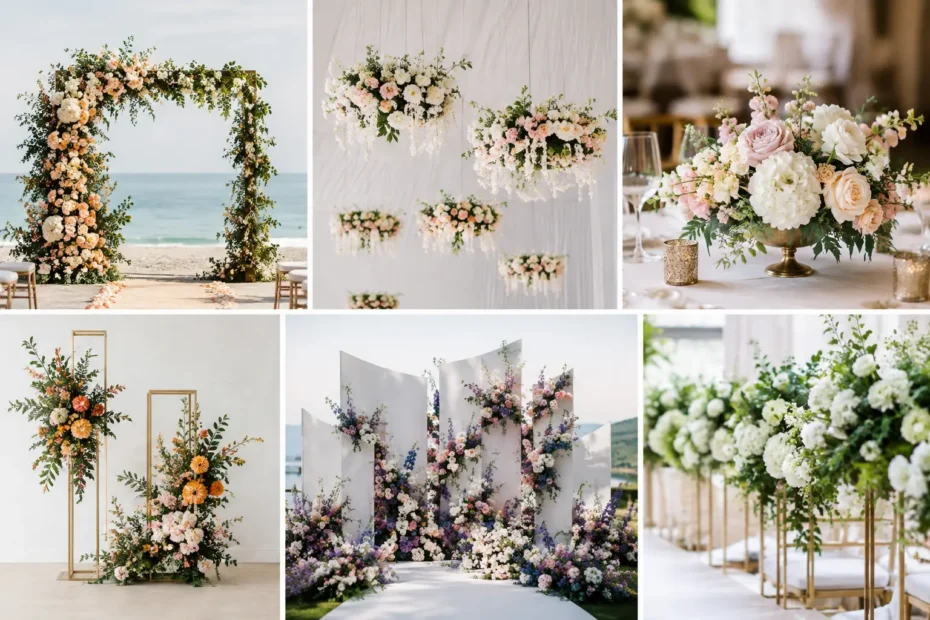
A ceremony arch can be beautiful, but couples are asking flowers to do more than frame one moment. The most exciting emerging floral installation styles create an atmosphere guests can feel from the first welcome sign to the last dance. They shape how a room moves, where the eye lingers, and how a celebration tells its story in photographs and in person.
For weddings and milestone events, the goal is not to select a trend simply because it is new. It is to find an artistic direction that feels true to your color palette, venue, and personality. A floral installation should feel intentional, whether your vision is softly romantic, garden-inspired, tailored and modern, or wonderfully unexpected.
What Emerging Floral Installation Styles Have in Common
The newest floral designs are less concerned with perfectly matching arrangements at every table and more focused on creating an experience. They bring flowers into unexpected places, use movement and negative space with confidence, and often layer blooms with living foliage, branches, fabric, candlelight, or architectural structures.
That does not mean every event needs flowers suspended from the ceiling or a full floral meadow. Scale should always serve the space. In a grand ballroom, an overhead moment can make a large room feel intimate. In a cozy private venue, one sculptural ceremony piece and beautifully considered tables may carry the design farther than several competing installations.
1. Grounded Floral Meadows
Grounded florals are transforming ceremony aisles and altar spaces into scenes that feel as though they have grown there naturally. Instead of relying on one elevated arch, this style places clusters of flowers, foliage, and textural elements at the base of the ceremony setting. The result can be airy and meadow-like, lush and abundant, or artfully minimal.
This approach is especially lovely for couples who want a garden feeling without making the backdrop feel formal or boxed in. Low floral groupings can curve around the couple, lead guests down the aisle, or nestle beside a fireplace, staircase, or sweetheart table. After the vows, many of these pieces can be relocated to the reception, adding value while keeping the visual story connected.
The trade-off is visibility. Grounded pieces need thoughtful placement so they enhance photographs without disappearing behind the wedding party or becoming lost in a large room. Height, aisle width, and the ceremony layout all matter.
2. Asymmetrical Ceremony Structures
Arches are evolving into more expressive forms: one-sided floral pillars, curved structures, open-ended frames, and layered installations that feel more like garden sculpture than a traditional backdrop. Asymmetry creates movement. It lets blooms trail upward, foliage reach outward, and the surrounding architecture remain part of the design.
This is a wonderful choice when a venue already offers something worth celebrating, such as tall windows, a dramatic wall, or an outdoor view. Rather than covering every inch, an asymmetrical installation draws attention to the setting while giving the ceremony a distinct focal point.
The most successful designs balance spontaneity with structure. Loose, garden-inspired flowers still need a secure foundation, and the composition must look beautiful from the guest perspective as well as in close-up photography. A professional floral designer considers both from the beginning.
3. Floral Clouds and Suspended Gardens
Flowers overhead create a sense of arrival. Suspended floral clouds, hanging foliage, and elevated garden installations are appearing above dance floors, head tables, entrances, and long banquet tables. They bring softness to venues with high ceilings and give guests something magical to discover when they look up.
A cloud installation does not need to be densely packed with blooms to make an impact. A lighter composition of foliage, delicate flowers, and thoughtful spacing can feel just as romantic while allowing the room to breathe. For a more dramatic look, layers of blooms and hanging elements create the impression of dining beneath a garden in full bloom.
This style depends heavily on venue rules and logistics. Ceiling height, approved rigging points, fire codes, installation timing, and access equipment affect what is possible. In suburban Chicago venues, where ballrooms and event spaces vary widely, a site visit and early planning conversation are particularly helpful. If overhead installation is not permitted, a raised floral framework or tall centerpiece design can create a similar sense of vertical drama.
4. Living Tablescapes With Movement
The classic centerpiece is no longer the only way to dress a reception table. Emerging tablescapes often use flowers as a continuous, evolving landscape. Think low floral “rivers” that travel the length of a farm table, small gardens gathered around candles, or individual blooms placed with intention among fruit, menu cards, and textured linens.
This style feels personal because it invites guests into the details. Instead of looking at one arrangement from across the table, they experience color, scent, and texture throughout the meal. It also photographs beautifully from above, which is especially meaningful for couples who have invested in stationery, place settings, and other reception details.
There is a practical balance to protect: conversation. Florals should never block guests from seeing one another across the table. Low, flowing designs are ideal for this reason, while taller moments can be used selectively on buffet tables, escort displays, or room focal points.
5. Sculptural Branches and Botanical Form
For couples drawn to a more editorial or contemporary look, sculptural branches are having a well-earned moment. Curving dogwood, airy quince, flowering branches, and carefully chosen foliage introduce line and shape in a way that flowers alone cannot. They can rise from a ceremony arrangement, twist above a bar, or create a dramatic statement at an entry.
This style is not limited to minimalist weddings. Branches can bring a woodland feeling to a romantic palette, add texture to a late-summer celebration, or make a winter wedding feel elegant rather than predictable. The key is choosing materials that complement the season and design direction.
Because branches carry visual weight, they work best when the rest of the composition is edited with care. Too many varieties or colors can make the installation feel busy. A refined palette allows the form to shine.
6. Color-Blocked Floral Moments
Soft neutrals will always have a place in wedding flowers, but bolder color stories are becoming more intentional. Color-blocked installations group flowers by hue to create a painterly effect: sunset tones moving from coral to peach to butter yellow, or a modern composition in shades of raspberry, lavender, and blue.
Rather than scattering every color evenly, this approach creates depth and direction. A ceremony piece may begin with deeper blooms at its base and gradually soften upward. A floral wall or escort display can use color to guide the eye across the design.
This look requires confidence and restraint. The answer is not necessarily more color, but better relationships between colors. Your floral designer can help decide whether the palette calls for rich contrast, tonal layers, or one bright accent against a quiet foundation.
7. Reusable Statement Pieces
Couples are increasingly asking one installation to work harder throughout the day. A floral meadow from the ceremony can be moved in front of a sweetheart table. A welcome display can become a photo moment. A bar arrangement can later enhance the cake table or lounge area.
This is not about treating florals as movable props. It is thoughtful event design that considers the flow of the celebration, the floral budget, and where guests will spend their time. Some pieces are easier to relocate than others, and delicate or heavily constructed designs may need to remain in place. Still, planning for a second life can make a floral investment feel even more meaningful.
Choosing a Style That Feels Like You
Before choosing an installation, consider the feeling you want guests to carry away. Do you picture an intimate garden party, a candlelit romantic evening, a colorful celebration full of energy, or a clean and modern gathering with unexpected botanical details? Your venue, guest count, season, and budget help refine the answer, but the emotional vision should lead.
At An English Garden Wedding & Event Florals, that conversation begins with your story and grows into a cohesive design for every meaningful moment. The right installation is not simply the largest one in the room. It is the one that makes the room feel like your celebration, beautifully and unmistakably.