
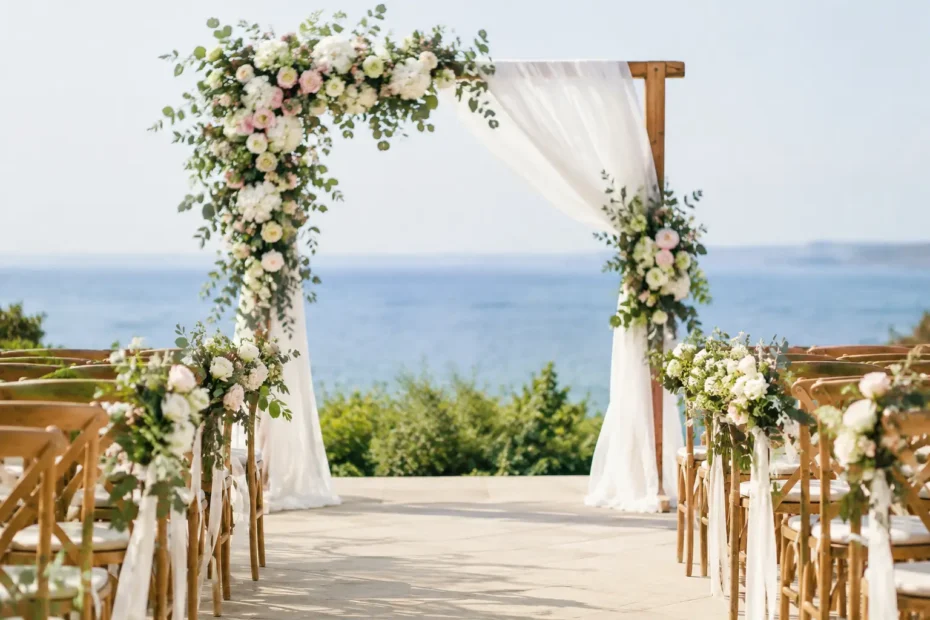
The moment you walk toward the person you love is already meaningful. Do I need ceremony flowers is really a question about how you want that moment to feel, look, and live on in your memories and photographs. The answer is not automatically yes. A beautiful ceremony can be simple, understated, and deeply personal. But thoughtfully designed flowers have a special way of turning a familiar room, garden, chapel, or outdoor lawn into a setting that feels entirely yours.
Do I Need Ceremony Flowers? Start With the Feeling
Ceremony flowers are not a requirement, and they do not need to be elaborate to make an impact. Their purpose is to create a focal point around your vows, guide guests’ eyes toward the moment that matters, and bring your wedding palette into the first chapter of the day.
Think about your venue without any added decor. Is there already a beautiful view behind you? Does the space have architectural character, lush landscaping, or a backdrop that feels complete on its own? If so, you may only need flowers that soften and personalize the scene, such as a pair of arrangements at the altar or a few aisle accents.
If your ceremony takes place in a ballroom, blank event room, tent, or a setting with visual distractions, flowers can do more of the transforming. A floral installation, ground meadow, or layered ceremony backdrop helps define where the vows are happening and gives the space a sense of intention. It tells guests, before a word is spoken, that this is a celebration shaped around your story.
The question is less about whether ceremony flowers are necessary and more about where they will create the most happiness for you.
What Ceremony Flowers Actually Do
A ceremony design does more than fill a few empty spaces. It creates a visual frame for the emotional moments that will be photographed from every angle: your entrance, the exchange of vows, the first kiss, and the joyful walk back down the aisle.
At the front of the ceremony, flowers create depth behind and around you. This could mean an airy floral arch, sculptural arrangements on pedestals, a garden-inspired meadow at your feet, or a more minimal grouping of blooms and greenery. The best choice depends on the setting and your style. A modern venue may call for clean, intentional floral shapes, while a garden estate may be lovely with loose, romantic blooms that appear to have grown there naturally.
Along the aisle, floral details can make the approach to the altar feel more inviting. Full clusters at every chair are not the only option. Small posies on selected aisle chairs, low meadow arrangements near the front rows, or petals placed with care can all add softness without overwhelming the space.
Personal flowers count here, too. Your bouquet, boutonniere, and wedding party flowers connect the ceremony to the rest of the celebration. Even if you choose very little floral decor at the altar, these pieces ensure the people standing beside you feel woven into the day’s color story.
When You Can Keep Ceremony Flowers Simple
Some couples picture a floral-filled aisle from the first day of planning. Others would rather put more of their budget toward dinner tables, a dramatic reception entrance, or a dance floor installation. Both choices can be right.
You may be comfortable with a lighter ceremony floral plan if your venue provides a naturally lovely setting, if your guest count is intimate, or if the ceremony will be brief and the reception is where you want the visual focus to be. A waterfront view, historic chapel, or flowering garden does not need to be covered up. In these spaces, flowers should complement what is already beautiful.
A simple plan can still feel polished. For example, a bridal bouquet paired with two altar arrangements can create a complete look in a small indoor ceremony. Outdoors, a delicate grouping of blooms at the base of the arbor may be all that is needed. The scale should feel proportionate to the space, not dictated by a trend.
The only caution is to avoid treating the ceremony as an afterthought. Guests gather there first, and your ceremony photographs will capture the setting closely. Even a modest floral plan benefits from a clear design direction, a considered color palette, and pieces placed where they will be seen best.
Put Your Budget Where It Can Work Twice
One of the most thoughtful ways to approach ceremony flowers is to choose designs that can move to the reception. This is not about making flowers look temporary. It is about allowing beautiful pieces to continue telling the story after the vows.
Altar arrangements can welcome guests at the reception entrance, frame a sweetheart table, or add height near the bar. Ground arrangements can be placed around a cake table, in front of the band, or beside lounge seating. A floral arch may remain in place for portraits, then become a beautiful photo moment for guests if the venue layout allows.
When discussing your floral vision, share the full timeline and floor plan with your designer. Repurposing requires thoughtful mechanics, enough time between events, and a team that can move arrangements safely without disrupting cocktail hour. It is often easier to reuse freestanding arrangements than flowers attached directly to chairs or an arbor.
For couples planning a wedding in Tinley Park, Frankfort, or the surrounding suburban Chicago area, venue logistics can shape this decision as much as style does. A ceremony and reception in the same location may make reuse very practical. Separate venues with a tight schedule may call for a more focused ceremony design instead.
Choose the Floral Moment You Will Remember
Not every ceremony needs an arch, and not every couple needs aisle flowers. If you are deciding where to invest, consider which scene feels most like the wedding you have been imagining.
For some, it is the view from the back of the aisle: chairs, candles, petals, and a ceremony focal point drawing everyone forward. For others, it is the close-up view during the vows, with flowers gathered around their feet and softly framing their hands. You might care most about the photographs after the ceremony, when a floral backdrop creates a romantic place for portraits with family and friends.
It can help to choose one primary floral moment and let the rest support it. If a sweeping garden meadow is your priority, keep chair decor minimal. If you love the idea of a statement floral structure, allow it to stand out rather than competing with too many smaller details. This approach often feels more cohesive than spreading the budget thinly across every possible surface.
Color also matters. Ceremony flowers do not have to match every reception centerpiece exactly, but they should feel related. Repeating a flower variety, ribbon tone, or accent color creates a natural visual thread from the first look through the final toast.
Consider the Season, Setting, and Practical Details
Flowers are living materials, and a good ceremony design accounts for how the day will unfold. An outdoor summer ceremony may require blooms that hold up well in heat and direct sun. Wind can affect lightweight arches, loose petals, and tall arrangements. For a church ceremony, there may be rules about attaching decor to pews or using open flames. A venue with a short setup window may favor designs that can be installed efficiently without sacrificing beauty.
This is where custom floral guidance makes a difference. A floral designer can recommend the right scale, mechanics, and varieties for your venue while protecting the feeling you want to create. The goal is never to persuade you into more flowers than you need. It is to make sure the pieces you choose are beautiful from the first guest arrival through your last ceremony photograph.
Let Your Ceremony Feel Like You
If flowers make you feel joyful, expressive, and excited to see your wedding vision come to life, ceremony flowers are worth considering. If your dream is quiet, unfussy, and centered on the setting itself, a smaller design may be the perfect expression of your day.
The most memorable ceremonies do not follow a checklist. They feel personal. Whether that means a meadow of seasonal blooms, a pair of elegant arrangements, or simply a bouquet held close as you say your vows, choose flowers that make the space feel like a true beginning to your celebration.