
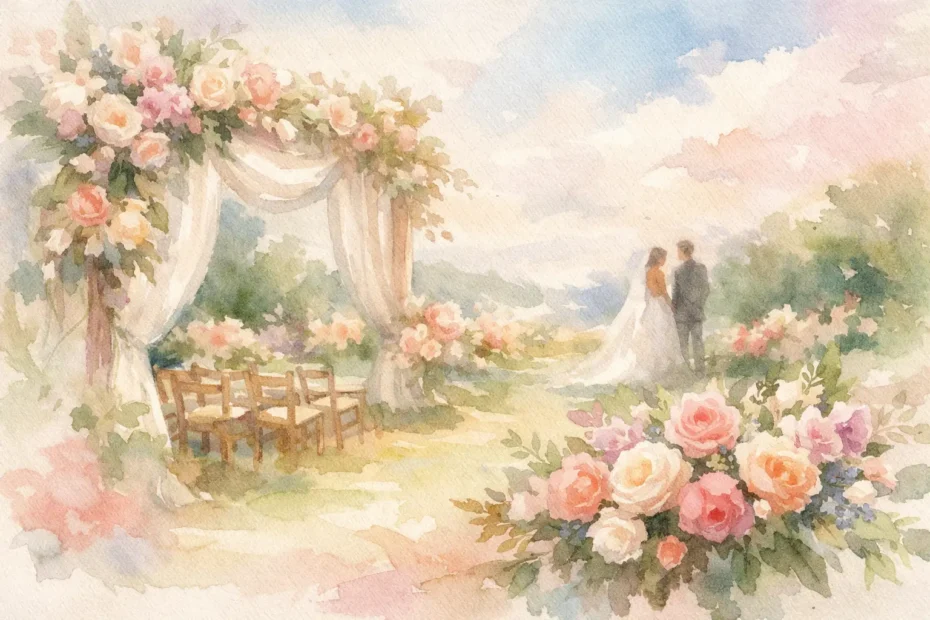
The first thing guests notice at an outdoor ceremony is not always the aisle or the chairs. It is the feeling of the space. Flowers play a large part in that, which is why planning flowers for outdoor wedding celebrations calls for more than choosing pretty blooms from a color palette. Sun, wind, heat, open landscapes, and the timing of your day all shape what will look beautiful and what will actually hold up.
Outdoor weddings can feel naturally romantic in a way that indoor spaces sometimes need help to achieve. A garden ceremony, a tented reception, or a backyard celebration already comes with movement, light, and texture. The role of florals is to complement that setting, not compete with it. When the design is thoughtful, flowers feel like they belong there, as if they grew into the story of your day.
What matters most when planning flowers for outdoor wedding settings
The biggest shift in floral planning for an outdoor event is that the environment becomes part of the design team. It can also become your toughest critic. A bouquet that looks perfect in a cool studio may soften in midday heat. Tall ceremony flowers may sway beautifully in a light breeze or become a real concern if the wind picks up. Even delicate ribbons, candles, and rental pieces can behave differently outside.
That does not mean outdoor flowers need to be limited or overly practical. It simply means every beautiful choice should also be an informed one. Season, weather exposure, flower variety, installation mechanics, and setup timing all matter. The most successful designs balance romance with resilience.
For many couples, this is also where professional guidance brings real peace of mind. You should not have to become an expert in which blooms can tolerate August sun or whether your ceremony arch needs added weight at the base. The floral planning process works best when design and logistics are treated with equal care.
Start with the setting, not just the palette
An outdoor wedding has its own personality before a single stem arrives. A manicured estate feels different from a rustic barn, a backyard tent, or a park ceremony surrounded by mature trees. The best floral plans respond to that character.
In a lush garden setting, softer designs often feel especially at home. Think airy arrangements, layered greenery, and flowers with movement. In a more open venue with wide skies and minimal landscaping, florals may need a bit more presence to define the space. Grounded aisle meadows, fuller altar pieces, or statement entry arrangements can help outdoor areas feel intentional and complete.
Color deserves the same kind of thought. What looks dreamy on a mood board can read very differently in natural light. Bright sun tends to wash out pale tones, while shaded ceremonies can deepen richer shades beautifully. White flowers remain timeless outdoors, but they often look strongest when paired with texture and subtle tonal variation rather than used as a flat, all-one-note design.
Choose flowers with the weather in mind
One of the most common questions couples ask is whether certain flowers are “safe” for an outdoor wedding. The honest answer is that it depends on the season, the time of day, and how exposed your venue is.
Some flowers are naturally sturdier than others. Roses, spray roses, lisianthus, ranunculus in the right season, mums, and many textural greenery varieties can perform well with proper care. Other blooms are more sensitive to heat or direct sun. Hydrangeas, for example, are loved for their fullness, but they can wilt quickly without enough water support. Sweet peas are delicate and romantic, but they are not ideal for every summer setup. Dahlias are stunning in late summer and early fall, yet they still need thoughtful placement and timing.
This is where flexibility becomes your friend. If you love a certain look, your florist can often recreate the feeling with blooms better suited to the conditions. You do not have to sacrifice beauty. You simply want flowers that can carry that beauty through the full celebration, not just the first fifteen minutes.
Ceremony flowers should frame the moment
Outdoor ceremonies already come with a backdrop, whether it is trees, a lawn, a waterfront view, or the architecture of the venue itself. Floral design should draw the eye to the couple without blocking what made you choose the location in the first place.
That often means being strategic rather than excessive. A floral arch can be breathtaking, but not every ceremony needs a fully covered structure. Sometimes a pair of asymmetrical floral pillars, grounded meadow arrangements, or floral moments at the aisle entrance feel more refined and more in tune with the landscape.
Scale matters here. In a large open space, undersized florals can disappear in photos and in person. In a more intimate garden, oversized designs may feel too formal or heavy. Good outdoor floral planning is about proportion. You want the flowers to hold their own while still letting the setting breathe.
Repurposing is also worth considering. Ceremony flowers that can move to the reception are often a smart choice for outdoor weddings, where setup windows can be tighter and floral impact matters across multiple spaces. Aisle clusters may become sweetheart table accents. Arch flowers can sometimes be redesigned for a bar, escort card table, or head table backdrop.
Personal flowers need beauty and durability
Bouquets, boutonnieres, flower crowns, and corsages spend more time in the elements than many couples expect. They are handled, photographed, carried, hugged, pinned, and worn for hours. For outdoor events, personal flowers should feel polished but also comfortable and dependable.
Bouquets with a natural garden style are especially lovely outside because they echo the movement of the setting. Still, they need structure. A bouquet that is too loose may not hold its shape in heat or wind. A design that is too heavy can become difficult to carry through a long outdoor ceremony and photo session.
Boutonnieres deserve special attention in warm weather. Some blooms simply do not perform well when worn close to the body in heat. Smaller, hardy flowers and refined textural elements often wear better and photograph just as elegantly.
Reception flowers should work with light and flow
Outdoor receptions usually shift over the course of the evening more dramatically than indoor events. Late afternoon sun, golden hour, twilight, and candlelight each reveal flowers differently. That changing light is part of the magic, but it should influence your floral choices.
Low centerpieces can feel lush and welcoming in tented receptions or al fresco dining setups, especially when paired with candles and layered tablescape details. Elevated pieces can add drama, though they should be designed with stability in mind if there is any breeze. If your reception is fully outdoors, flame restrictions, wind exposure, and table spacing may all affect the final look.
Texture often becomes just as important as color. Garden roses, trailing greenery, berry tones, airy blooms, and layered foliage create dimension that reads beautifully from day to night. Outdoor receptions benefit from floral designs that feel alive, not stiff.
A realistic timeline protects your flowers
One of the quietest but most important parts of outdoor floral design is timing. Flowers are living elements. The longer they sit in full sun before guests arrive, the harder they have to work.
This is why setup plans matter so much. Some pieces can be installed earlier. Others are better placed as close to ceremony time as possible. Bouquets should stay in water until they are needed. Delicate personal flowers may need cool storage. If your day includes a long gap between photography and the ceremony, that should be part of the planning conversation from the beginning.
In the suburban Chicago area, weather can change quickly from one season to the next and sometimes within the same day. Spring winds, summer heat, and early fall temperature swings all influence floral timing. Building in a thoughtful setup window and a weather-aware backup plan is part of caring well for the design.
The best outdoor florals feel personal
Practical choices matter, but the heart of wedding flowers is still emotional. Your florals should say something about you. Maybe that is an airy, garden-inspired palette that feels soft and romantic. Maybe it is a cleaner look with refined white blooms and layered greenery. Maybe it is color, movement, and florals that feel gathered from a blooming English garden.
The point is not to copy what worked at another wedding. It is to create something that feels true to your setting, your season, and your story. At An English Garden Wedding & Event Florals, that is often where the most beautiful work begins – not with a fixed recipe, but with a conversation about how you want the day to feel.
When you are planning flowers for outdoor wedding moments, think beyond what is pretty in a photo. Think about what will move gently in the breeze, hold beautifully through the ceremony, glow in the evening light, and make the entire space feel unmistakably yours. That is where floral design becomes more than decor. It becomes part of the memory.