
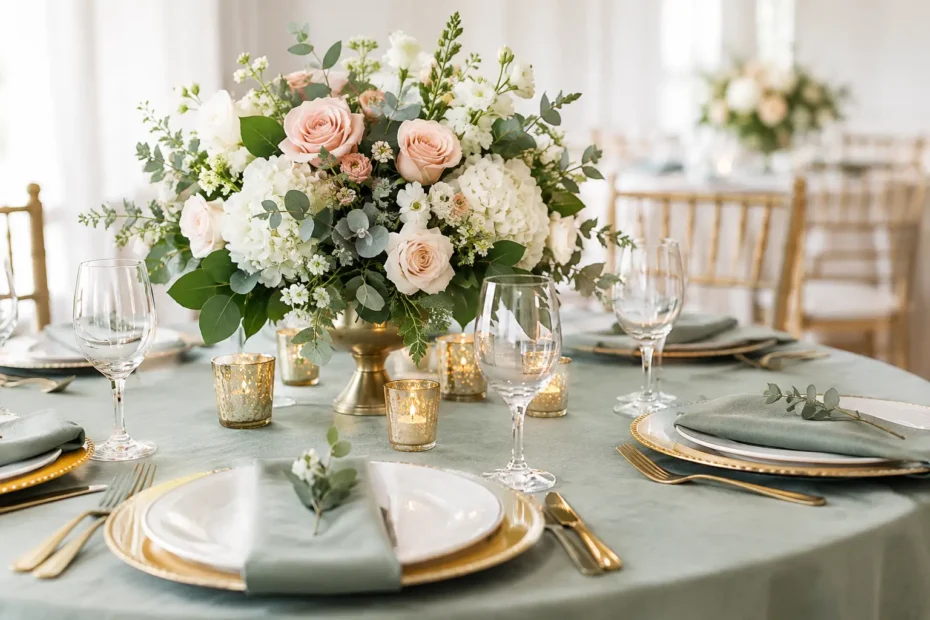
A reception room can change completely once the linens are in place. A soft ivory cloth makes candlelight feel warmer; a deep olive napkin brings an organic richness to the table; a patterned runner can introduce personality before a single bloom arrives. So, can flowers match linens? Absolutely. The most memorable answer is not a strict color-for-color match, but a thoughtful conversation between the two.
For weddings and celebrations, flowers and linens work together to create the setting around your guests. One brings movement, fragrance, and seasonal beauty. The other creates a foundation that carries your color palette from table to table. When they are designed with intention, the result feels polished, personal, and full of life.
Can Flowers Match Linens Without Looking Too Matched?
Yes, but matching does not have to mean identical. A blush tablecloth with blush roses can be beautiful, yet it may feel flat if every element lands at the same shade and intensity. The more elegant approach is to let the floral design echo the linens while adding variation through tone, texture, and contrast.
Imagine champagne linens paired with garden roses in soft peach, creamy ranunculus, and delicate pale pink sweet peas. The flowers relate to the warmth of the fabric, but the subtle shifts in color give the centerpiece dimension. Or picture dusty blue napkins with white lisianthus, silvery eucalyptus, and a small touch of blue delphinium. The floral palette acknowledges the blue without turning the table into one uninterrupted field of color.
This is where custom floral design becomes especially valuable. Linens are usually chosen early, often from a small swatch viewed under showroom lighting. A floral designer can help translate that tiny fabric sample into an arrangement that will look beautiful in the real venue, under the actual lighting, alongside candles, place settings, and the people gathered to celebrate.
Start With the Feeling You Want Guests to Experience
Before selecting a flower color to match a linen color, consider the atmosphere. The same ivory linen can support very different stories. Paired with white roses, delicate greenery, and clear glass vessels, it feels airy and classic. Add caramel-toned roses, rust ranunculus, and brass candleholders, and it becomes warm, layered, and autumnal.
For a romantic garden-inspired wedding, linens may provide a quiet backdrop while the flowers carry the emotion. Neutral cloths in ivory, sand, or soft gray allow lush blooms to take center stage without competing for attention. This is often a wonderful choice for couples who love color but want their reception to remain timeless in photographs.
If you are planning a bolder celebration, a colored linen can become part of the floral story. Rich burgundy, forest green, French blue, or soft lavender can make a room feel immediately intentional. In these cases, flowers need room to breathe. A mix of neutrals, tonal blooms, and a few carefully chosen accents usually feels more refined than using only flowers in the exact same shade as the fabric.
Choose a Relationship, Not Just a Color Match
There are several beautiful ways flowers and linens can relate to each other. The right one depends on your venue, season, and personal style.
Tonal Pairing Creates Soft Romance
Tonal design uses neighboring shades within one color family. With sage green linens, you might use green hydrangea, ivory roses, pale yellow ranunculus, and trailing foliage. With mauve napkins, consider antique roses, blush stock, plum scabiosa, and soft gray foliage.
This approach feels romantic because it has depth without sharp contrast. It is especially lovely for garden venues, tented celebrations, and couples drawn to an elegant, naturally gathered look.
Contrast Adds Energy and Definition
Contrast can make a table feel vibrant and photograph beautifully. Terracotta linens can be paired with butter yellow, cream, and warm pink flowers. Navy cloths look striking with white blooms, soft blue accents, and fresh greenery. Black linens can create a dramatic base for sculptural white flowers, deep red roses, or unexpected spring pastels.
The trade-off is that high contrast asks for restraint elsewhere. If the linen is strong and the flowers are equally bold, simplify vessels, menus, and candle colors so the table still feels composed rather than crowded.
Texture Can Do as Much Work as Color
A flower arrangement does not need to repeat the linen color exactly to feel connected. Texture often creates the bridge. A gauzy, draped runner pairs beautifully with airy cosmos, sweet peas, and lightly trailing greenery. A velvet linen calls for lush, velvety blooms such as roses, ranunculus, and dahlias. Crisp, tailored napkins can support a cleaner floral composition with structured tulips, calla lilies, or sculptural branches.
Patterned linens deserve a slightly different approach. If the fabric has a floral print, keep centerpieces more focused and let the pattern have its moment. If the print is subtle, such as a delicate stripe or woven texture, flowers can be fuller without competing. The goal is not to hide either element. It is to let both contribute to the celebration.
Consider the Full Table, Not Only the Centerpiece
Flowers and linens are part of a larger visual picture. Charger plates, glassware, menus, chairs, candleholders, and even the color of the room can shift how a palette reads. A peach arrangement may look gentle against ivory linen but much more vivid next to blue glassware. Gold flatware warms cool-toned flowers, while silver often gives a fresher, more traditional feel.
This is why a design conversation is more helpful than choosing pieces in isolation. Bring linen swatches, inspiration images, and details about your venue to your floral consultation. If you have chosen rental pieces, share photographs. If you are still deciding, a designer can help you understand which linen colors will support the floral investment you want to make.
At An English Garden Wedding & Event Florals, this kind of collaboration is part of creating flowers that tell your story. A bouquet, ceremony installation, and reception tables should feel connected, but they should not feel copied and pasted. The linens help carry that story through the room.
Let the Season Guide the Palette
Seasonality is another practical consideration when flowers match linens. A specific shade can be possible in one season and more difficult, or more costly, in another. For example, a spring palette of lilac linens and sweet peas feels effortless when those blooms are naturally available. Recreating the same look in late summer may require different flowers and a slightly adjusted palette.
Rather than forcing an exact match, allow your floral recipe to respond to the season. A skilled designer can preserve the feeling of your chosen color story using flowers at their best. That flexibility often produces arrangements with more character, better movement, and a more natural sense of abundance.
It also protects your budget. If a linen color calls for rare blooms in a very specific shade, choosing complementary tones can deliver the same visual impact without placing all the pressure on one hard-to-source flower. The most beautiful tables are not always the most literal ones.
A Few Pairings That Always Feel Thoughtful
Ivory or champagne linens are wonderfully versatile with white, blush, peach, butter yellow, or soft blue flowers. They are an ideal choice when you want floral color to lead the room.
Sage or olive linens pair naturally with cream flowers, warm neutrals, blush tones, and garden greenery. They feel especially at home in outdoor-inspired celebrations and venues with wood, stone, or warm metal details.
Dusty blue linens work beautifully with white, pale blue, lavender, and soft peach. Add greenery sparingly if you want an airy, refined look rather than a heavily botanical one.
For black, navy, or deep jewel-toned linens, use flowers with a clear point of contrast. Cream, white, muted pink, and warm caramel tones keep the arrangement visible and elegant. A little darker floral accent can create drama, but too much can cause the centerpiece to disappear into the table.
Give Yourself Permission to Be Personal
There is no rule that says your flowers must match your linens, and there is no rule that says they cannot. The best choice is the one that makes the room feel like yours. Perhaps your grandmother loved lilacs, your first date was at a garden café, or you want the warmth of late summer reflected in every detail. Those personal notes matter more than following a formula.
Choose linens that make you feel excited when you picture your guests taking their seats. Then let your flowers add the softness, movement, and heart that make the table feel welcoming. When fabric and blooms are chosen as companions instead of duplicates, the room begins to tell a story before the first toast is raised.