
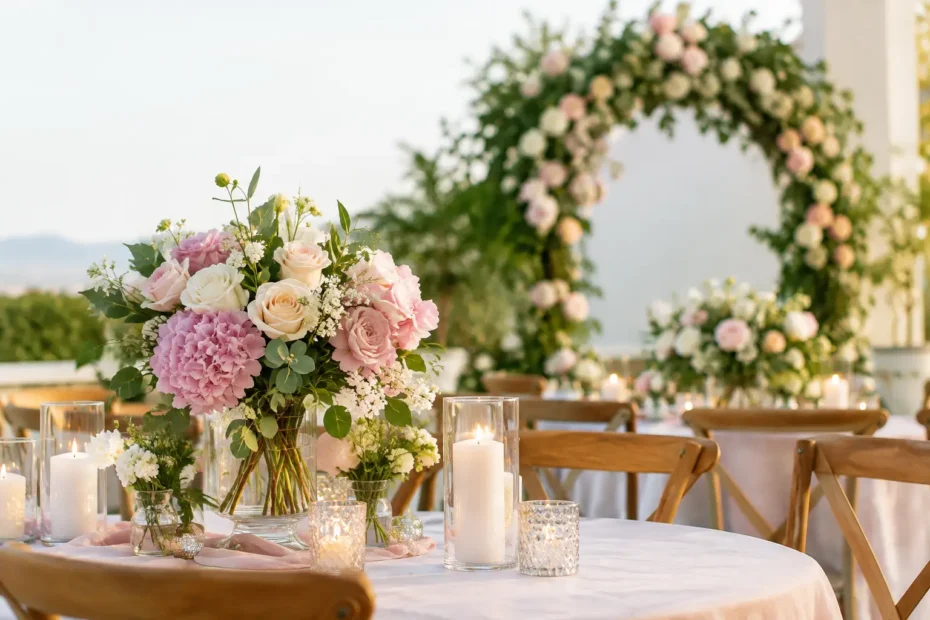
An engagement party is often the first gathering where the newly engaged couple gets to see their love story reflected back by the people closest to them. If you are wondering how to decorate an engagement party, begin with that feeling rather than a shopping list. The most memorable celebrations do not need to look overly formal or crowded with décor. They need a clear point of view, welcoming spaces for conversation, and details that feel personal to the couple.
Whether you are hosting a garden brunch, a candlelit dinner at home, or a private event in the Chicago suburbs, flowers can set the emotional tone from the moment guests arrive. A thoughtful floral plan brings color, texture, and a sense of occasion to even the simplest room.
Start With the Feeling You Want Guests to Have
Before choosing a color palette or ordering a single vase, decide what the party should feel like. Perhaps the couple loves old-world romance, with soft garden roses, trailing greenery, and taper candles. Maybe their style is modern and cheerful, calling for sculptural blooms in vivid seasonal colors. A relaxed backyard party may suit loose arrangements, bud vases, and blooms gathered in a mix of heights.
The feeling should guide every decorative choice. A formal restaurant dinner does not require the same amount of styling as a casual open-house celebration, and a bright daytime shower-inspired party will need a different approach than an evening cocktail gathering. Trying to use every trend at once can make the setting feel less intentional. Choose two or three words that describe the mood, such as romantic, fresh, playful, polished, natural, or intimate, and return to them as you make decisions.
Personal details help the décor feel like it belongs to this particular couple. You might pull a soft blue from the proposal outfit, use the flowers from a favorite vacation destination as inspiration, or choose a palette that hints at the wedding to come without copying it exactly. The engagement party can be a beautiful preview of the season ahead, but it should still have its own identity.
Create a Cohesive Color Palette
A reliable palette usually includes a dominant color, a supporting color, and a neutral that gives the eye a place to rest. For example, blush and apricot flowers feel especially warm against ivory linens and candlelight. White blooms with fresh green foliage create a timeless look, while terracotta, amber, and berry tones bring richness to a fall celebration.
Flowers are especially useful because they can connect the entire room without making every surface look identical. Repeat the same floral ingredients in varied forms: a welcoming entry arrangement, smaller centerpieces for tables, and a few delicate stems near the drinks or dessert. This creates continuity while keeping the design natural.
Consider the existing space, too. The brick, wood, upholstery, wall color, and lighting in a venue all become part of the palette. A floral design that looks lovely against a white backdrop can disappear in a dim restaurant or compete with patterned wallpaper. During a consultation, a floral designer can help translate a color idea into blooms that will actually shine in the setting.
Let the Season Guide Your Flower Choices
Seasonal flowers tend to feel more natural, and they often offer better value and availability. Spring engagement parties may call for tulips, ranunculus, sweet peas, and flowering branches. Summer lends itself to garden roses, hydrangea, cosmos, and dahlias. Fall is beautiful with textured foliage, rich roses, chrysanthemums, and dried accents. Winter gatherings can feel luxurious with amaryllis, hellebore, evergreens, and warm candlelight.
If you have your heart set on a particular bloom, ask about it early. Some flowers can be sourced outside their traditional season, but that may affect cost and availability. A designer can often suggest a seasonal alternative that keeps the same mood while respecting the budget.
Focus on the Places Guests Will Notice Most
You do not need to decorate every corner of the venue. Put the budget toward the moments that welcome guests, encourage connection, and appear in photographs. A few well-designed focal areas will have more impact than many small, disconnected decorations.
The entrance deserves attention because it introduces the party’s mood. This could be a floral arrangement beside a welcome sign, a pair of garden-inspired urns, or a smaller arrangement on a console table in a home. It should feel like a warm invitation, not an obstacle at the door.
The main gathering area is next. For a seated meal, table florals create the strongest visual impression. For a cocktail-style event, concentrate on the bar, food station, and a few high-traffic tables. The dessert display is another lovely place for a floral moment, especially if the couple is cutting a cake or posing for photos there.
If there is a natural wall, fireplace, garden fence, or windowed corner, it may be the perfect backdrop for photos. A full flower wall is not always necessary. A lush asymmetrical arrangement, greenery drape, clustered bud vases, or rented backdrop paired with florals can create a polished focal point without overwhelming the room.
Choose Table Décor That Leaves Room for Connection
Engagement parties are full of catching up, toasts, and stories, so guests need to be able to see one another. Keep centerpieces low enough for conversation or use elevated arrangements with clear, slim bases that preserve sightlines. For long tables, a meadow-like design of bud vases, candles, and small floral clusters can feel abundant without becoming bulky.
Mixing vessels adds personality, but the materials should still relate to one another. Clear glass feels airy and classic. Ceramic compotes lend a more collected garden feeling. Brass or gold-toned vessels add warmth for an evening party. When you have several tables, repeat a small set of vessel styles rather than using a different look everywhere.
Candles make flowers look even more romantic, particularly after sunset. Use votives and tapers in varying heights, while checking the venue’s rules about open flames. If flames are not allowed, quality LED candles still bring softness and glow. Just remember that candlelight is part of the design, not an afterthought to add at the end.
Add Meaningful Details Without Overdecorating
The best engagement party décor has a few moments that make guests smile because they reveal something about the couple. A framed photo from the proposal, a handwritten welcome note, cocktail napkins in a favorite color, or a simple display of family engagement photos can be enough. These details work best when they are edited thoughtfully rather than scattered around the room.
A card box, guest book, or date-night idea station can also become part of the décor when styled with a small floral accent and beautiful signage. If gifts are expected, create one clear, designated area so they do not interrupt the dining or social spaces.
Avoid filling every open area simply because it is available. Negative space lets floral arrangements, candlelight, and the joy in the room stand out. It also keeps a smaller venue from feeling crowded.
Plan for Setup, Weather, and the Real Flow of the Party
Beautiful décor should work as well as it photographs. If the celebration is outdoors, ask how flowers will hold up in heat, wind, or direct sun. Delicate blooms may need shade, weighted vessels, or a backup indoor plan. For backyard parties, make sure pathways remain clear and arrangements are not placed where children, pets, or guests carrying drinks may bump into them.
For an at-home event, rentals can make the space feel more intentional without requiring a complete transformation. Linens, arches, display pieces, candleholders, and specialty vessels can help define the party’s style. In Mokena, Tinley Park, Frankfort, and surrounding communities, a floral design team can also coordinate delivery and placement so the host is free to greet guests rather than arranging centerpieces at the last minute.
Think about timing as well. If the party begins in daylight and extends into the evening, décor should look appealing in both conditions. Soft lighting becomes more important as the sun goes down, while daytime events benefit from fresh color and visual texture that reads beautifully in natural light.
Work From a Clear Décor Budget
Set the floral and décor budget early, then share it honestly with your designer. A thoughtful plan can be created at many price points, but priorities matter. If photographs are a major focus, invest in an entrance or backdrop and keep guest tables more understated. If the celebration centers on a long dinner, put more of the budget into the tablescape and candlelight.
Repurposing can help, too. Ceremony-style arrangements are not usually needed for an engagement party, but a statement entry arrangement can later move beside the dessert table. Smaller centerpieces can be sent home with close family members as a gracious ending to the evening.
The goal is not to fill the room with flowers. It is to create a setting where the couple feels celebrated, their guests feel cared for, and every lovely detail supports the happiness already in the air.