
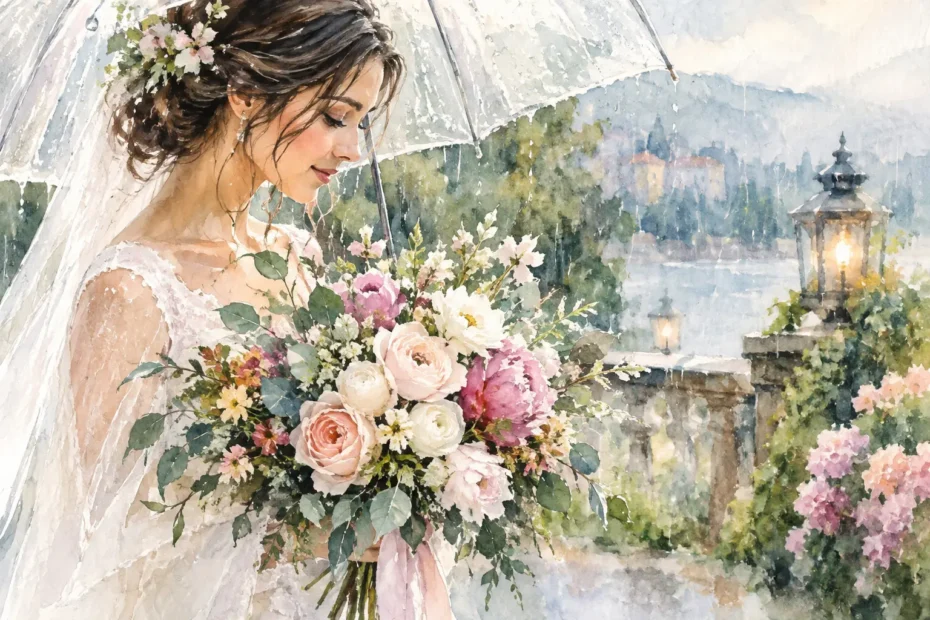
A rain forecast can change the feeling of wedding week in an instant. But rainy wedding florals do not have to look like a backup plan. With thoughtful flower choices, secure design mechanics, and a little flexibility around placement, rain can become part of the atmosphere: soft light, deeper garden color, and a celebration that feels intimate rather than interrupted.
The goal is not to pretend the weather does not matter. It does. Rain affects delicate petals, outdoor installations, aisle arrangements, and the timing of photos. The most beautiful approach is to plan for both possibilities from the beginning, so your flowers feel at home whether the day brings sunshine, mist, or a true spring shower.
How to Plan Rainy Wedding Florals
The best rain plan begins with an honest conversation about your venue. An open-air ceremony in a garden, a tented reception, a covered patio, and a ballroom with large windows all call for different floral decisions. During the design process, identify the spaces that are fully protected, partially covered, and completely exposed. Those details help determine where statement pieces can safely live and what can be moved quickly if needed.
A floral design should have a beautiful Plan A and a believable Plan B. For example, ceremony meadows or aisle clusters may be designed in smaller, transportable groupings rather than one large installation. If rain arrives, they can move to the base of an indoor ceremony backdrop, frame the welcome sign, or add an abundant garden feeling around the sweetheart table.
This is especially helpful for couples hosting celebrations in the suburban Chicago area, where a sunny morning can give way to an afternoon storm with little warning. A flexible floral plan protects the experience without asking you to sacrifice the personal details that matter most.
Choose Flowers With a Little More Strength
Every flower reacts differently to moisture. Some blooms are naturally more forgiving, while others bruise, wilt, or become translucent when rain collects on their petals. This does not mean delicate flowers are off limits. It simply means they may be best reserved for protected areas, personal flowers, or designs that can be brought out shortly before the ceremony.
For outdoor arrangements, flowers with sturdy stems and petals often hold up beautifully. Roses, ranunculus, lisianthus, stock, scabiosa, carnations, spray roses, and many varieties of chrysanthemums can offer romance along with resilience. Textural greenery, flowering branches, ferns, olive, and smilax can also create movement and fullness without relying entirely on fragile blooms.
Hydrangeas deserve special consideration. They create the lush, garden-inspired volume many couples love, but they are thirsty flowers. In humid or rainy conditions, they may thrive if properly hydrated, yet a warm or windy break in the weather can cause them to fade quickly. Their placement and hydration plan matter as much as their color.
More delicate choices such as sweet peas, cosmos, poppies, and certain garden roses can still be wonderful. We may place them in a bridal bouquet, a covered reception installation, or a ceremony design that is installed only once the weather settles. The trade-off is simple: the more exposed a flower is, the more its natural delicacy needs to be respected.
Protect the Pieces That Matter Most
Your bouquet, boutonnieres, corsages, and flower crowns deserve extra care on a rainy day because they travel with you. A bouquet should stay in water until it is time for portraits or the ceremony, rather than sitting in a warm bridal suite for hours. A small hand towel is useful for gently drying the handle or catching raindrops before you walk down the aisle.
Boutonnieres can be kept cool and dry until just before family photos. For flower crowns, a flexible base and thoughtfully chosen blooms make a meaningful difference. A rain-kissed crown can look enchanting, but it should not become heavy or lose its shape halfway through the celebration.
Ceremony arches, floral pillars, and large ground arrangements need reliable mechanics. Heavy rainfall can saturate soil, soften foam, weigh down branches, and make surfaces slippery. Designs should be securely anchored and built with materials appropriate for the venue. If a large installation is positioned outdoors, it should also have a clear relocation plan that does not create a scramble for your family or wedding party.
At An English Garden Wedding & Event Florals, that kind of preparation is part of creating happiness through floral artistry. The visible beauty of a design matters deeply, but so does the behind-the-scenes care that lets you stay present on your wedding day.
Think Beyond the Ceremony Site
Rain can change how guests move through a celebration. If everyone enters through a covered side door rather than the garden path, the welcome flowers should move too. If cocktail hour shifts under a tent, arrangements intended for outdoor lounge tables may become part of the bar or buffet display.
This is where versatile floral pieces shine. Bud vase collections, compote arrangements, urns, and clustered garden designs can be redistributed easily while still looking intentional. Rather than relying on one oversized piece to create the entire effect, a layered design gives your floral décor more places to tell your story.
It also helps to prioritize the spaces guests will experience up close. A welcoming entry arrangement, a beautifully flowered ceremony focal point, and warm reception centerpieces usually have more impact than flowers spread thinly across every outdoor corner. Rain may narrow the usable footprint of your venue, but it can also create a closer, more inviting atmosphere.
Let the Weather Shape the Color Story
Cloud cover can be remarkably flattering for wedding flowers. Soft gray skies make blush, butter yellow, pale blue, lavender, and cream appear gentle and luminous. Richer hues such as burgundy, raspberry, plum, terracotta, and deep green gain a romantic depth against wet stone, wood, and foliage.
If your ceremony is outdoors, consider how your palette will read in photographs without direct sunlight. White flowers can look crisp and elegant, but adding greenery, texture, or a few deeper-toned blooms helps define the arrangement. A mostly neutral palette can also feel more dimensional with varied flower shapes: ruffled garden roses, airy astrantia, spiky veronica, soft ranunculus, and delicate trailing vines.
Rain also gives candlelight a special role. Once arrangements move under cover or indoors, votives and hurricane-protected candles can add warmth to the scene. Florals, glass, and candlelight together create a glow that feels especially memorable when rain taps gently beyond the windows or tent walls.
Give Your Photographer a Few Floral Moments
You do not need a clear sky for meaningful floral photographs. In fact, rain can make certain images feel more personal: a bouquet against a dark umbrella, petals catching a few drops, or a just-married walk beneath a covered walkway filled with soft garden color.
Ask your floral designer and photographer to coordinate on timing. Your bouquet can be delivered fresh and photographed before it spends time outdoors. Ceremony flowers can be staged in their best location after the weather decision is made. If portraits move inside, arrangements near windows, fireplaces, staircases, or the head table can offer a beautiful backdrop.
A clear umbrella is often worth considering if rain is likely. It keeps faces visible, lets your attire and flowers remain part of the image, and feels polished without competing with the floral palette. Still, do not force outdoor portraits in a downpour. Comfort, safety, and joy will always photograph better than determination.
A Rain Plan Is an Act of Care
A thoughtful rain plan is not about expecting disappointment. It is about giving yourselves more freedom. When the forecast changes, you should be able to focus on holding hands, greeting your people, and enjoying the celebration you planned, not wondering where the aisle flowers will go.
Share your backup locations with your florist, planner, venue coordinator, and photographer before the wedding day. Decide who makes the weather call, when that decision needs to happen, and which floral pieces take priority if a move is necessary. Clear communication turns a stressful unknown into a calm, coordinated adjustment.
The loveliest wedding flowers are not only those that look beautiful in perfect conditions. They are the flowers that support the feeling of the day, whatever the sky decides to do. Let the rain soften the light, deepen the garden colors, and make the moments under cover feel even closer. Your celebration can still bloom exactly where it is meant to.