
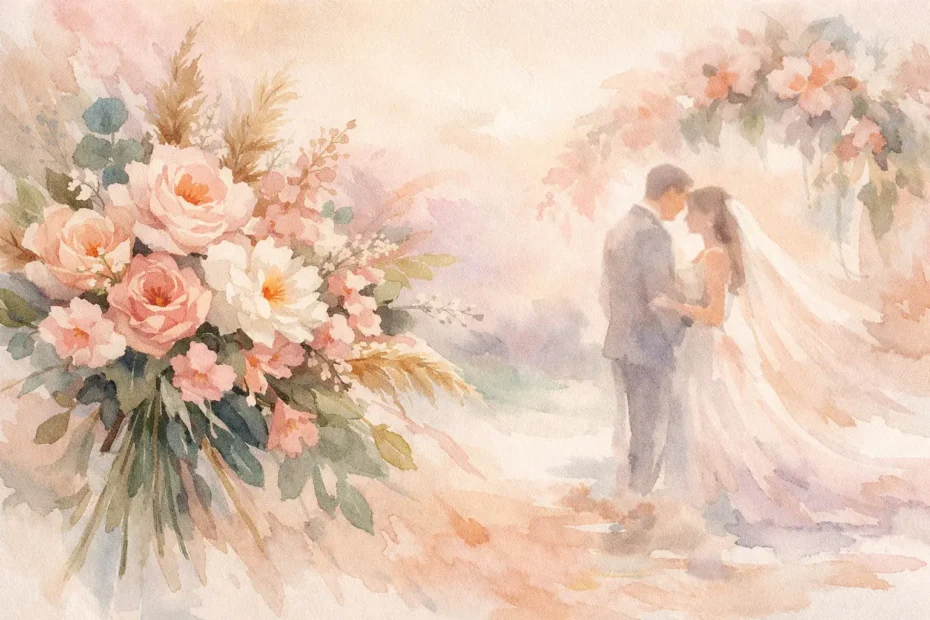
One of the quickest ways to tell whether a wedding feels current is to look at the flowers. Not because trends should decide your day, but because they reveal what couples are craving now – more personality, more atmosphere, and floral design that feels like an extension of the celebration rather than a decoration added at the end. The wedding flower trends 2026 couples are asking for reflect that shift beautifully.
This year is less about following a single look and more about creating a floral story. Couples still want romance, but they also want intention. They want flowers that photograph beautifully, move naturally in the room, and feel connected to the season, the setting, and the people gathering there.
Wedding flower trends 2026 are becoming more personal
The biggest change heading into 2026 is that floral design is feeling more individual. Instead of choosing a palette from a trend report and applying it everywhere, couples are starting with mood. Sometimes that mood is soft and garden-inspired. Sometimes it is sculptural, moody, playful, or quietly elegant. The common thread is that the flowers are expected to say something.
That means color choices are becoming more expressive. We are seeing less pressure to stay inside one predictable wedding palette and more interest in layered tones that feel collected and dimensional. A blush wedding may include apricot, faded rose, butter cream, and a touch of brown plum for depth. A white wedding may bring in soft green, smoke, or pale blue so the design does not fall flat.
For couples planning in the suburban Chicago market, this is especially appealing because venues vary so widely. A ballroom, a loft, a country club, and a garden setting each hold color differently. Personalization matters because the right floral direction depends on the room as much as the Pinterest board.
Color is softer, richer, and more nuanced
The all-or-nothing palette is fading. In its place, 2026 is leaning into color stories with subtle transitions. Think terracotta softened with peach and sand. Think mauve with berry and caramel. Think clean ivory made more interesting with olive foliage and a whisper of yellow.
There is also growing interest in unexpected accent colors. A largely neutral design might include a concentrated moment of rust, chartreuse, or blackberry. Used carefully, that contrast gives arrangements more life. It also makes the overall floral plan feel custom rather than generic.
The trade-off is that nuanced color takes restraint. Too many tones without a clear plan can read busy. This is where thoughtful design matters most – not every beautiful flower belongs in the same arrangement.
Garden movement over stiff formality
If there is one visual signature in wedding flower trends 2026, it is movement. Couples are gravitating toward florals that feel airy, natural, and alive. That does not mean messy. It means compositions with shape, breathability, and a sense that the flowers are growing into the space rather than being packed tightly into it.
Centerpieces are reflecting this shift. Lower designs are staying popular because they make conversation easy, but they are being styled with a lighter hand. Instead of one compact mound, tables are seeing looser arrangements, delicate branching elements, and intentional negative space. The result is elegant and romantic, with more visual rhythm across the room.
Ceremony flowers are evolving in a similar way. Couples still love floral arches and statement backdrops, but they are asking for designs that feel more organic. Asymmetry, layered meadow moments, and floral clusters that frame rather than overpower are especially strong. A ceremony installation does not need to be oversized to be memorable. It needs to feel right for the setting and meaningful in photographs.
Bouquets are balancing softness and shape
Bouquets in 2026 are neither extremely tight nor overly wild. The most beautiful ones sit in the middle. They have gesture and movement, but they still feel polished in the hand. Brides are drawn to bouquets with petal texture, trailing details, and a mix of focal blooms and lighter supporting flowers that create dimension.
White and green bouquets remain timeless, but they are being reimagined with more textural depth. Garden roses, ruffled blooms, delicate vine work, and soft seasonal ingredients help a classic bouquet feel fresh. For color-forward weddings, bouquets are becoming a place to introduce tonal layering in a more intimate way.
Scale matters here too. Oversized bouquets can be beautiful, but they are not right for every dress silhouette or every height. The best bouquet trend is the one that feels balanced with the person carrying it.
Statement florals are moving where guests actually look
In past years, some floral budgets were concentrated in traditional places simply because that was the expectation. In 2026, couples are thinking more strategically. They want impact, but they want it where it will truly shape the guest experience.
That is why floral installations are becoming more placement-driven. Entry moments, escort card displays, bar arrangements, cake meadows, and sweetheart table designs are drawing more attention. These areas create strong first impressions and are photographed constantly, so flowers there often work harder than a few extra arrangements scattered elsewhere.
Reception florals are also becoming more layered. Instead of treating each table as a separate design problem, couples are thinking about the room as one composition. That may mean mixing high and low centerpieces, adding candlelight to soften the space, or carrying floral elements from the head table into nearby architectural features for continuity.
This approach works especially well when a couple wants a luxurious look without placing flowers on every possible surface. It is less about quantity and more about visual focus.
Rentals and florals are being designed together
Another strong trend for 2026 is integration. Flowers are no longer planned in isolation from the rest of the decor. Linen color, candle vessels, arches, pedestals, vases, and backdrop elements all play a role in how floral design reads in the room.
When those pieces are chosen together, the final result feels far more elevated. A simple arrangement can look stunning in the right vessel. A ceremony floral moment can feel fuller and more intentional when it is paired with thoughtfully selected structures or styling pieces.
This is one reason couples increasingly value a florist who can guide the overall visual direction, not just provide stems. The design process becomes calmer when someone is looking at the entire picture.
Seasonal flowers still matter, but flexibility matters too
Couples are more educated than ever about flowers, and many are asking smart questions about what will be naturally beautiful in their wedding season. That is a lovely shift. Seasonal design often delivers better movement, stronger freshness, and a more authentic sense of place.
At the same time, 2026 is not about rigid rules. If a couple has a strong vision tied to a particular bloom, there may be ways to honor it without forcing it everywhere. Sometimes that means featuring a favorite flower in the bouquet while allowing centerpieces to lean more seasonally. Sometimes it means capturing the feeling of a bloom through color and texture rather than insisting on one exact variety.
This balance is especially helpful in Midwest wedding planning, where weather, shipping, and availability can influence floral choices. The goal is not to remove creativity. It is to build a design that is both beautiful and realistic.
What couples should take from wedding flower trends 2026
The best trend insight for 2026 is simple: flowers are being used more intentionally. They are not there just to fill tables or match bridesmaid dresses. They are shaping atmosphere, reflecting personality, and helping a celebration feel deeply considered.
For some couples, that means soft garden arrangements with layered neutrals and candlelight. For others, it means bolder color, playful texture, and a floral installation that transforms the room. Neither approach is more correct. What matters is that the choices feel connected to your story, your venue, and how you want guests to feel when they walk in.
At An English Garden Wedding & Event Florals, that is the heart of good floral design – listening closely, designing with care, and creating flowers that feel as memorable as the day itself.
If you are planning a wedding in 2026, let trends inspire you, but do not let them flatten your vision. The most lasting floral moments are the ones that feel unmistakably yours.