
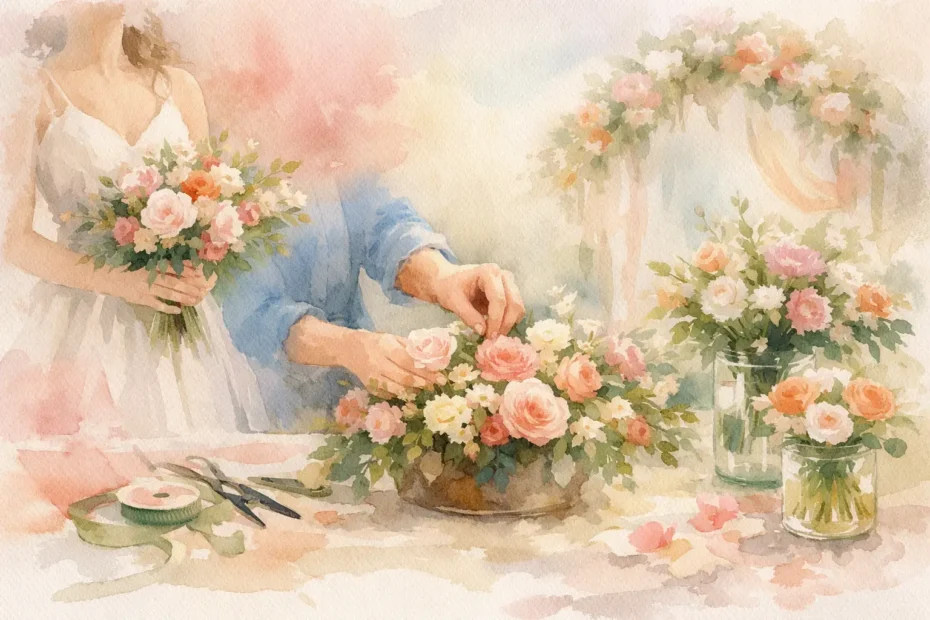
A bouquet is the part everyone notices first. But if you have ever wondered what does a wedding florist do, the answer reaches far beyond handing over pretty flowers on the morning of your ceremony. A wedding florist helps shape the feeling of the day – the softness of the aisle, the welcome at the entrance, the intimacy of the tables, and the little details that make the celebration feel unmistakably yours.
For many couples, florals begin as a color palette or a few saved photos. What a wedding florist really brings is interpretation. They take ideas, preferences, venue details, seasonality, and budget, then turn all of that into a floral story that feels cohesive from the first bouquet to the last centerpiece.
What does a wedding florist do during the planning process?
The work usually starts long before flowers are ordered. A wedding florist listens closely to how you want the day to feel. Romantic and airy, lush and garden-inspired, clean and modern, softly whimsical, richly dramatic – these are design directions, not just decorating terms. They guide decisions about flower varieties, color movement, scale, texture, and placement.
During consultation, a florist learns about your venue, ceremony layout, reception style, attire, guest count, and the moments that matter most to you. A couple getting married in a church with a large altar has different floral needs than one exchanging vows in a backyard or a ballroom. Likewise, a candlelit evening reception calls for a different approach than a bright daytime garden celebration.
This is where floral design becomes both creative and practical. A skilled wedding florist helps you decide where flowers will have the most impact. Sometimes that means investing in a statement ceremony installation and keeping guest tables more understated. Other times it means focusing on personal flowers and lush centerpieces while letting the venue architecture do the rest. There is no single right formula. It depends on your priorities, your space, and how you want guests to experience the day.
A wedding florist is part designer, part project manager
One of the biggest misconceptions is that florists simply arrange blooms. In reality, they manage a long chain of moving parts.
They create design proposals, help refine floral selections, track counts for personals and table pieces, source seasonal blooms, communicate timing, plan mechanics for installations, and coordinate delivery and setup. If rental items are involved – vessels, arches, candles, stands, or other styling pieces – those details also need to be accounted for and placed with care.
That project management side matters more than most people realize. Wedding mornings run on tight timelines. Bouquets need to arrive fresh and photo-ready. Ceremony flowers must be installed safely and on schedule. Reception florals have to be styled in a way that works with linens, place settings, candles, and the room as a whole. A dependable florist is not just making something beautiful. They are making beauty happen under real-world conditions.
Personal flowers are only one piece of the job
When couples picture wedding flowers, they often think first of bouquets and boutonnieres. Those are important, but they are only one category.
A wedding florist typically designs personal flowers such as bridal bouquets, bridesmaid bouquets, boutonnieres, corsages, flower crowns, and floral accents for hair or attire. These pieces are worn, carried, and photographed up close, so they need to feel intentional and refined.
Then there are ceremony flowers. This might include aisle markers, altar arrangements, meadow-style installations, floral arches, ground pieces, welcome table flowers, or arrangements for religious spaces. Ceremony florals often set the emotional tone for the entire event, so scale and placement matter just as much as the flower choices themselves.
Reception florals bring another layer. Centerpieces, sweetheart table designs, escort card table flowers, bar arrangements, cake flowers, and statement installations all help turn a room into an experience. The best reception florals do not feel scattered or random. They feel connected – as though each detail belongs to the same story.
What does a wedding florist do with your inspiration?
Not every flower in an inspiration photo will be available, in season, or suited to your budget. That does not mean your vision is out of reach. It means your florist translates inspiration instead of copying it.
This is one of the most valuable parts of the process. A florist looks at your references and identifies what you are actually responding to. Is it the palette? The looseness of the shape? The movement of trailing greenery? The abundance? The softness? The contrast between delicate blooms and more structured flowers?
From there, they build a design that captures the feeling you love while making smart choices for the season and setting. Spring flowers behave differently than late-summer flowers. Some blooms are delicate and best for hand-held work, while others hold up better in installations or centerpieces. A good florist understands those differences and designs with them in mind.
Sourcing flowers is its own expertise
Wedding flowers are not pulled from a shelf the way everyday retail bouquets might be. They are sourced specifically for your event.
A wedding florist works with wholesalers and supply channels to secure flowers, greenery, and supporting materials in the quantities and varieties needed. They pay attention to quality, freshness, color consistency, and timing. If a flower arrives looking weak or off-tone, substitutions may need to happen quickly and thoughtfully.
This behind-the-scenes work is easy to overlook, but it directly affects the final result. Flowers are perishable. They respond to weather, shipping conditions, seasonality, and handling. An experienced florist knows how to condition stems, store blooms properly, and time design work so everything looks fresh at the exact moment it needs to.
Installation, styling, and the finished atmosphere
Some of the most meaningful work happens after the arrangements are made. Delivery and installation are where floral plans become a real environment.
A wedding florist does not simply drop off centerpieces at the door. They place, style, adjust, and troubleshoot. They make sure ceremony pieces are balanced, tables feel polished, candles and florals work together, and key visual moments are camera-ready. If a room needs a touch more fullness or an arrangement needs to be shifted to better suit the space, those decisions happen on site.
For larger floral features, mechanics matter as much as artistry. Hanging installations, arches, entry pieces, and backdrop flowers need proper structure and secure placement. Beauty should never come at the expense of safety or function.
This is one reason custom floral design feels so transformative. It is not just about the flowers themselves. It is about how they shape what your guests see, feel, and remember.
Budget guidance is part of the florist’s role too
Flowers are emotional, but they are also an investment. A wedding florist helps you understand where your budget is going and how to use it well.
That might mean explaining why certain blooms cost more, why large installations require more labor, or how repurposing ceremony flowers for the reception can stretch your budget. It may also mean steering you away from a Pinterest idea that sounds simple but is surprisingly labor-intensive.
Honest guidance is a gift here. The goal is not to say yes to every idea. The goal is to create something beautiful, realistic, and aligned with your priorities. Couples usually feel more at ease when they understand the trade-offs clearly.
Why the right florist changes the experience
The difference between ordering flowers and hiring a wedding florist is the difference between buying ingredients and having a chef plan the meal. One gives you stems. The other gives you vision, direction, and execution.
The right florist pays attention to the emotional side of the celebration while keeping a steady hand on the logistics. They notice the neckline of the gown, the color of the linens, the tone of the venue, the timing of setup, and the way one floral choice affects another. They help you make decisions with confidence, not guesswork.
For couples in the suburban Chicago area who want florals to feel personal rather than generic, that level of care matters. It is what turns wedding flowers from a checklist item into one of the most memorable parts of the day.
If you are choosing a florist, look for someone who listens well, communicates clearly, and designs with both beauty and purpose. The best wedding flowers do more than decorate a room. They hold the mood, reflect the people at the center of it, and make the whole day feel more fully alive.
When florals are done thoughtfully, they do not just fill space. They create a sense of occasion your guests can feel the moment they walk in.