
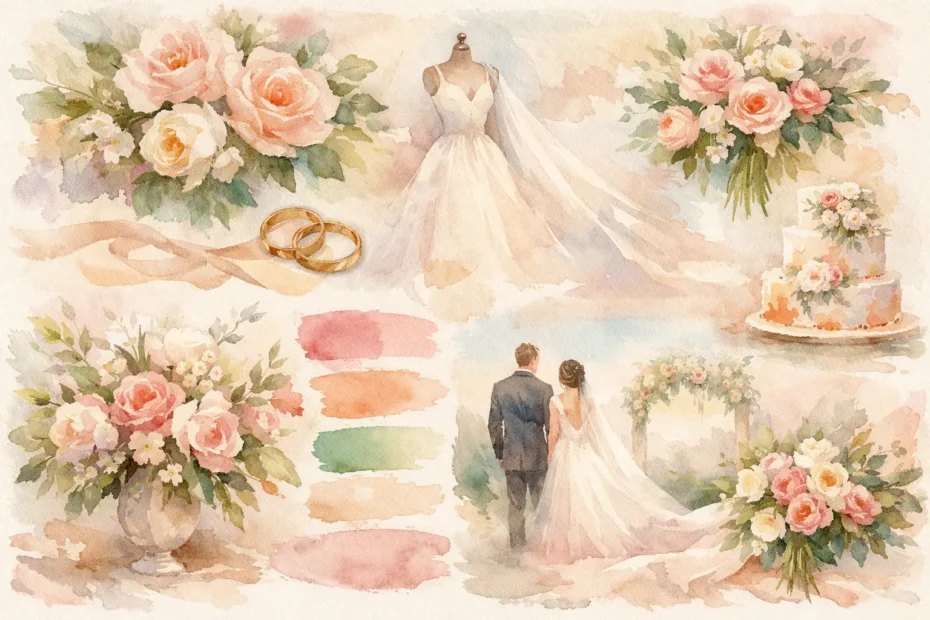
A beautiful wedding rarely starts with flowers alone. It starts with a feeling – the soft hush of a garden ceremony, the candlelit warmth of a ballroom dinner, the effortless romance of blooms that look as though they belong exactly where they are. That is why a wedding floral mood board example can be so helpful early in planning. It gives shape to your vision before a single centerpiece is designed, helping your flowers, décor, and overall atmosphere speak the same language.
For many couples, the challenge is not knowing what they like. It is knowing how to pull everything together. You may love blush roses, textured greenery, blue taper candles, and antique gold accents, but those details need a clear relationship to one another. A floral mood board makes that connection visible. It turns scattered inspiration into a thoughtful design direction.
What a wedding floral mood board example should show
A strong mood board is not simply a collage of pretty images. It should tell a cohesive visual story. At its best, it reflects your color palette, flower preferences, venue style, season, and the overall mood you want guests to feel the moment they arrive.
That means a wedding floral mood board example should include more than bouquets. It often brings together floral textures, ceremony ideas, table styling, linen tones, candlelight, personal flowers, and even small details like ribbon, vessels, or architectural surroundings. When these elements are viewed side by side, it becomes much easier to see whether your vision feels refined and consistent or busy and disconnected.
This is where expert guidance matters. Some combinations look lovely on their own but compete when placed together. Others may be stunning in a photo but unrealistic for your season or budget. A well-built board balances inspiration with real design decisions.
A romantic garden mood board example
Imagine a spring wedding with an elegant garden feel. The color palette begins with ivory, blush, soft peach, and muted sage, then deepens slightly with dusty blue for contrast. The flowers featured include garden roses, ranunculus, lisianthus, sweet peas, delphinium, and airy greenery. Nothing feels stiff or overly formal. The shapes are loose, layered, and natural, with movement in every arrangement.
On the board, the bridal bouquet is rounded but not tight, with soft trailing accents and delicate ribbon. Ceremony flowers frame the couple without overwhelming the space – perhaps floral meadows at the base of an arch or lush arrangements placed asymmetrically for a more organic look. Reception centerpieces vary in height, mixing fuller focal blooms with lighter textural pieces so the tables feel collected rather than repetitive.
The supporting details matter just as much. Linen swatches in warm ivory soften the palette. Gold candleholders add glow without stealing attention. A photograph of the venue garden or a room with large windows helps ground the board in a real environment. Even a simple image of stationery in soft deckled paper can reinforce the mood. Together, those details communicate romance, freshness, and quiet elegance.
Why this kind of board helps your florist
Flowers are deeply visual, but floral design is also about interpretation. A florist can hear words like romantic, timeless, whimsical, or natural, and each one may suggest something slightly different. A mood board closes that gap. It creates a shared reference point so your designer understands not only which flowers you love, but how you want them to feel.
This can save time and reduce stress during the planning process. Instead of making decisions in pieces, you can evaluate the full story. Does the bouquet feel too polished for the reception style? Are the ceremony florals too sparse compared with the fullness you want on the tables? Does the color palette lean sweeter than you intended? Those questions are easier to answer when the visuals are gathered in one place.
It also helps with prioritizing. If your mood board clearly shows that lush tablescapes and statement ceremony flowers are central to your vision, your budget can be directed there first. If personal flowers are the emotional centerpiece, that can guide the design conversation instead. Not every floral element needs the same level of investment. A mood board reveals what matters most.
How to build your own wedding floral mood board example
Start with emotion before specifics. Ask yourself how you want the day to feel. Soft and romantic is different from modern and sculptural. A garden-inspired celebration feels different from a black-tie ballroom evening, even if both use white flowers.
Next, gather images with intention. Choose photos that reflect floral shape, color harmony, and overall atmosphere, not just individual stems you happen to like. If every image is beautiful but from a completely different design style, the board will create more confusion than clarity.
Then narrow your palette. Most successful floral boards rely on a core set of colors with one or two accents, rather than trying to incorporate everything at once. If your venue already has strong carpeting, dark wood, bright walls, or dramatic lighting, that should be considered too. The setting becomes part of the palette whether you plan for it or not.
From there, include a mix of large-scale and close-up inspiration. Wide room shots help establish mood and proportion. Close-up bouquet and centerpiece images show flower texture and mechanics. Both matter. A board filled only with detail images may be lovely, but it will not help you visualize the event as a whole.
What couples often get wrong
One common mistake is building a board around flower names only. While bloom choice matters, mood is often driven more by color, shape, movement, and density. Peonies can feel airy and romantic in one design, or structured and formal in another. The flower itself is only part of the story.
Another issue is mixing too many aesthetics. A sleek modern centerpiece, a wildflower bouquet, and a classic formal ceremony arch may all be beautiful individually, but together they can pull the event in different directions. It does not mean you cannot blend styles. It simply means the combination should be intentional.
Seasonality is another place where expectations need gentle adjustment. Some flowers are more available, more affordable, or more successful in certain months. If your dream board is filled with delicate spring blooms for a late fall wedding, your florist may suggest similar flowers that preserve the mood without forcing an exact copy. That is not a compromise in a disappointing sense. Often, it leads to a design that feels even more personal and appropriate.
Using your mood board as a planning tool
Once your board is complete, it should not sit untouched in a folder. It can guide decisions across the entire event. Your bridal bouquet should feel connected to your ceremony flowers. Your centerpieces should make sense with your candle selections, linens, and place settings. Even rental pieces like stands, vases, or backdrop structures should support the same visual rhythm.
This is especially valuable if you are planning a wedding in the suburban Chicago area, where venues can vary widely in style. A ballroom, industrial loft, and garden-inspired event space all interact with florals differently. A thoughtful mood board helps your florist design for the room you actually have, not just the inspiration image you saved months ago.
At An English Garden Wedding & Event Florals, this kind of visual clarity is part of creating flowers that feel personal rather than generic. The goal is never to recreate a photo exactly. It is to translate your story, your setting, and your style into floral design that feels natural, polished, and entirely your own.
A mood board should guide, not restrict
The most helpful thing to remember is that a mood board is a direction, not a rigid script. It should give your design team a strong understanding of your preferences while still leaving room for creativity, seasonality, and the special details that emerge as your plans come together.
Sometimes the best floral moments are the ones that were not obvious at the beginning. A slightly deeper accent tone may give the palette more sophistication. A different bloom may add texture you did not know you needed. A ceremony installation may work better repurposed behind the sweetheart table than as two separate pieces. These choices come from collaboration, and collaboration works best when the vision is clear.
If you are starting your floral planning and feeling unsure where to begin, a mood board is a lovely first step. It gives beauty a framework and inspiration a purpose, helping your wedding flowers become more than decoration. They become part of the atmosphere, part of the memory, and part of the story your guests will feel long before they find the words for it.