
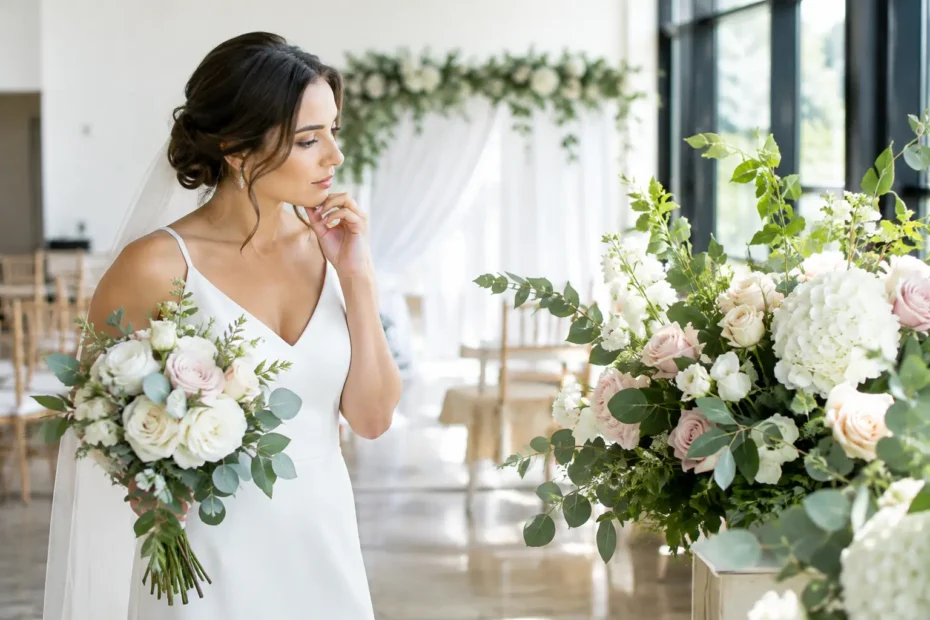
A ceremony arch filled with garden roses, a candlelit reception, petals along the aisle – these details can make a celebration feel deeply personal. But venue flower restrictions can change how those ideas come to life. The good news is that a restriction is rarely the end of a design vision. More often, it is an invitation to create something equally beautiful with the right planning, materials, and floral expertise.
For couples planning in Tinley Park, Frankfort, Mokena, and the greater suburban Chicago area, the venue is often the first major decision after the date. Before falling in love with a floral inspiration photo, it helps to understand what the space permits, what it protects, and how your florist can shape the design around those guidelines.
Why venues place restrictions on flowers
Most floral rules exist for practical reasons, not because a venue wants to take beauty out of the room. Historic buildings may need protection from moisture, wax, tape, or hardware. Ballrooms and country clubs need clear exits and safe walkways for guests and staff. Outdoor venues may be protecting gardens, lawns, wildlife, or neighboring properties.
Some restrictions also come from a venue’s insurance policy or local fire code. Open-flame candles, suspended installations, and large structures can require specific safety measures. A venue may insist that arches be weighted, that ceiling décor be installed only by approved professionals, or that candles be enclosed in glass.
Understanding the reason behind a rule makes it easier to find a thoughtful alternative. A “no hanging décor” policy, for example, does not mean a reception cannot feel lush and immersive. It may simply mean the drama needs to come from elevated centerpieces, floral pillars, or a carefully designed sweetheart table instead.
Common venue flower restrictions to ask about
Your contract may mention some rules, but the event coordinator often has the most useful day-of details. Ask early, ideally before finalizing your floral proposal, so the design can be both imaginative and realistic.
Candles and open flame
Many venues allow only enclosed candles, while others require LED candles in every area. This can affect aisle décor, centerpieces, and the soft glow around a head table. High-quality LED candles can still create warmth, especially when layered with flowers, bud vases, and reflective glassware. If real flame is permitted, confirm whether votives must be enclosed, whether taper candles are allowed, and who is responsible for lighting and extinguishing them.
Petals, confetti, and loose flower pieces
Fresh petals look lovely beneath a ceremony arch, but some venues do not allow them because they stain, become slippery, or blow across outdoor grounds. Dried petals, confetti, rice, and glitter are even more likely to be prohibited.
There are graceful ways to preserve the celebratory moment. A flower-lined aisle can create the same romantic softness without scattering petals. For a grand exit, guests might wave ribbon wands, ring bells, or hold small bunches of foliage, depending on the venue’s policies.
Hanging flowers and ceiling installations
A suspended floral meadow or hanging greenery can transform a room, but it requires secure attachment points, sufficient ceiling height, and a venue willing to accommodate the installation. Some spaces prohibit anything from ceilings; others require use of their in-house rigging team. This is a decision to make early because installation time, equipment, and labor all affect the floral budget.
If hanging designs are not possible, consider tall, garden-inspired arrangements that draw the eye upward. Flowering trees, elevated compotes, and statement arrangements placed around a dance floor can give the room dimension while keeping all mechanics safely on the ground.
Attachment methods and structures
Venues may prohibit nails, staples, command strips, glue, wire, or tape on walls, doors, mantels, and furniture. They may also limit the size or placement of arches and backdrops. A professional floral team plans for freestanding mechanics, weighted bases, and protective materials that leave the venue exactly as it was found.
This matters especially for ceremony designs. A meadow-style installation, floral columns, or a freestanding arch can frame your vows beautifully without attaching anything to a wall or doorway. The visual effect can be abundant and effortless, even when the engineering behind it is carefully considered.
Water, cleanup, and floral disposal
Fresh flowers need water, and tall arrangements sometimes need substantial mechanics to remain stable. Certain venues have rules about where buckets may be filled, whether water can be carried through guest areas, and how floral waste must be removed. They may also require all décor to be cleared by a specific time after the reception.
These details are easy to overlook, but they are part of dependable event execution. A florist should account for setup windows, breakdown requirements, and the condition of rental items so you are not worrying about logistics when the celebration is underway.
How to work with venue flower restrictions without losing your style
Begin with your story, not a single centerpiece photo. Do you want your wedding to feel like a summer garden party, an elegant candlelit dinner, a modern floral moment, or a joyful gathering full of color? When the desired feeling is clear, there are usually several ways to create it.
A garden-inspired look might call for layered blooms at the base of the ceremony space, delicate bud vases on dinner tables, and floral clusters around signage. If a venue does not allow aisle petals, those layers can move to the chairs, the altar, or the reception entrance. The flowers still tell the story, just in a way that honors the space.
Scale is another useful design tool. If a ballroom cannot accommodate a large arch, a pair of floral pillars may create a more polished frame without crowding the aisle. If ceiling décor is off limits, a statement installation at the bar, escort-card display, or sweetheart table can become the visual focal point guests remember.
It is also wise to be flexible about materials. Fresh flowers are not always the only answer, but alternatives should feel intentional. Potted plants, flowering branches, fabric draping, fruit, candlelight, or rental pieces can support the floral design and help a room feel complete. The best choice depends on the season, the venue’s rules, your budget, and how much visual impact you want from each area.
Questions to bring to your venue walkthrough
A venue walkthrough is the right time to move beyond general questions like, “Can we have flowers?” Share your preliminary floral ideas and ask where designs can safely go. Confirm the ceremony footprint, reception table sizes, ceiling height, loading access, setup and teardown windows, and any décor that must remain in place.
Ask whether the venue has preferred or required vendors for lighting, rigging, or draping. Find out if the team can move ceremony flowers to the reception after vows, and whether that transition has to happen during cocktail hour. If you are considering candles, ask for the exact policy in writing rather than relying on a verbal yes.
Finally, clarify what happens if weather changes an outdoor plan. A beautiful floral installation needs a secure indoor backup location, particularly in the Chicago area where a warm, sunny forecast can shift quickly. Designing for both possibilities brings peace of mind and protects the investment you are making in your flowers.
Why your florist should see the rules early
The strongest floral designs are shaped by both artistry and logistics. When a florist receives venue guidelines early, they can recommend designs that suit the room, the schedule, and the budget from the beginning. That avoids the disappointment of approving a concept only to discover that it cannot be installed as imagined.
At An English Garden Wedding & Event Florals, we believe the planning process should feel supportive, not restrictive. A rule about flames, petals, or installation methods is simply another design detail to solve with care. Through thoughtful mechanics, seasonal flowers, and a close understanding of your event vision, the result can still feel personal, romantic, and entirely yours.
Bring the venue rules to your floral consultation, along with photos of the space and the details that make you happiest. The right design will not fight the setting. It will make the setting feel as though it was waiting for your celebration all along.