
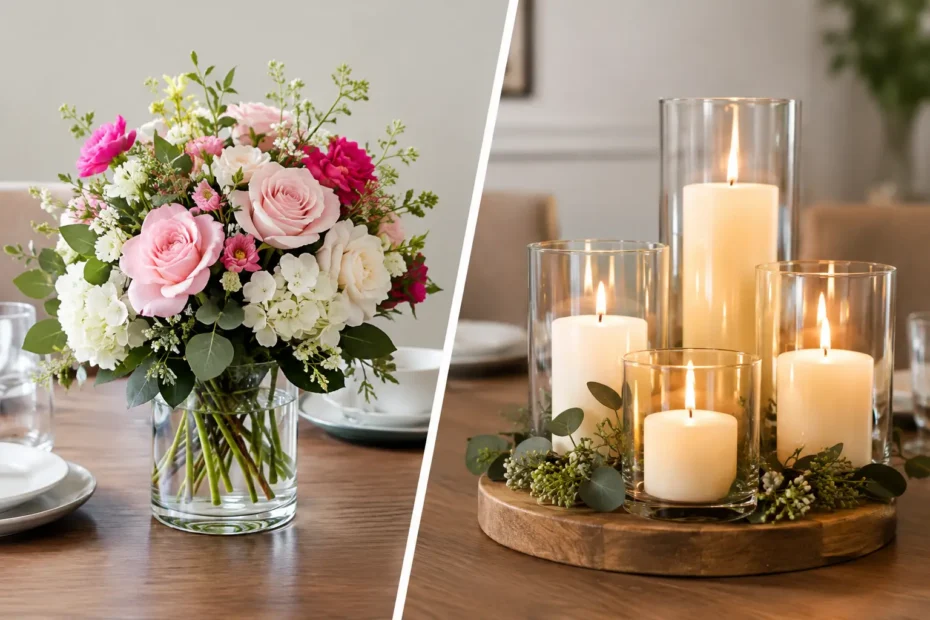
A reception table can feel lush and celebratory, softly romantic, or quietly dramatic before the first guest takes a seat. When choosing floral centerpieces vs candle centerpieces, the right choice is less about following a trend and more about deciding how you want the room to feel when your favorite people gather around the table.
Flowers bring color, movement, texture, and a sense of season. Candles create warmth, intimacy, and a beautiful glow that changes as day turns to evening. Both can be lovely on their own. For many weddings and milestone celebrations, the most memorable answer is a thoughtful mix of the two.
What Floral Centerpieces Bring to the Table
Floral centerpieces make a personal statement. A garden-inspired design of meadowy blooms, trailing foliage, and airy branches tells a very different story than a tailored arrangement of roses, orchids, and clean-lined greenery. Flowers can echo a bridal bouquet, carry ceremony colors into the reception, or introduce a surprise shade that makes the room feel distinctly yours.
They also give guests something to discover up close. The variation in petals, stems, fragrance, and texture makes each table feel alive. For couples who want their wedding to feel connected to the season, florals offer a natural starting point: tulips and flowering branches in spring, abundant garden roses in summer, dahlias in fall, or evergreen and berry accents in winter.
Best for color-forward, story-led celebrations
Choose floral centerpieces when color is a major part of your design vision, when your venue needs softness, or when you want the tables to carry as much personality as the ceremony space. Flowers are especially effective in ballrooms, banquet halls, and larger reception rooms where they can break up neutral surroundings and create an immediate sense of occasion.
Florals also photograph beautifully in daylight. If your reception begins in the afternoon or your room has generous windows, floral designs retain their visual impact from cocktail hour through dinner. A well-designed arrangement can make the whole tablescape feel finished even before place settings and candlelight are added.
The practical considerations
Floral centerpieces do require thoughtful planning. Premium blooms, seasonal availability, vessel choice, installation time, and the scale of each arrangement all shape the investment. A low, full arrangement may use more flowers than expected, while a tall design may require mechanics, statement vessels, and careful transport.
Height deserves special attention. Guests should be able to see one another comfortably across the table. As a general design rule, arrangements work best when they are low enough to look over or tall enough to see beneath. The space directly at eye level is usually best left open for conversation.
If anyone at your event is sensitive to scent, your floral designer can guide you toward varieties with little to no fragrance. Beautiful flowers do not need to compete with dinner, champagne, or the bakery’s dessert table.
What Candle Centerpieces Bring to the Table
Candle centerpieces are about atmosphere. A cluster of votives, hurricanes, tapers, or pillar candles can make even a simple room feel intimate and intentional. As the evening deepens, candlelight softens the edges of the room, flatters guests, and gives the celebration a warm, gathered feeling.
For a winter wedding, a candlelit reception can feel especially magical. In warmer months, candles paired with delicate greenery or a few bud vases create an easy, romantic look without covering the table in a large arrangement. Candle designs can suit formal black-tie receptions, relaxed garden dinners, and nearly every style in between because the mood comes from the light itself.
Best for evening ambience and understated romance
Candle centerpieces shine at evening receptions, in moody venues, and in spaces where overhead lighting feels too bright or impersonal. They are also a lovely choice for couples who prefer an edited color palette. Clear glass, warm ivory candles, and a hint of greenery can feel refined without asking every table to make a bold floral statement.
Candles can visually connect a large room, too. Repeating pools of light across tables, bars, welcome displays, and lounge areas creates continuity. The effect is often more expansive than a single centerpiece because it carries through the entire guest experience.
The practical considerations
Candles are not automatically the lower-cost option. The candles themselves may be modest, but glass hurricanes, votive holders, taper vessels, setup, cleanup, and rental quantities can add up. A candle-focused table is usually most effective when it uses enough pieces to create a genuine glow rather than one small candle in the center of a large round table.
Venue policies matter as well. Some venues permit only enclosed flames, while others require flameless candles. This does not have to diminish the design. High-quality LED candles can provide a warm, flickering effect, particularly when placed in beautiful glass vessels and layered throughout the room. Your florist and venue team should confirm these details well before the event day.
Avoid strongly scented candles near dinner service. The goal is to create ambience, not introduce another competing fragrance at the table.
Floral Centerpieces vs Candle Centerpieces: Key Differences
The simplest distinction is this: flowers are the visual focal point, while candles are the emotional setting. Floral arrangements hold their own in full daylight and support a color-rich wedding design. Candles become more powerful as the light fades and are exceptional at creating closeness and warmth.
Your guest count and table layout can help clarify the choice. Long farmhouse tables often look beautiful with a greenery runner, bud vases, and varied candlelight stretching down the center. Large rounds can support one lush floral centerpiece, a cluster of smaller arrangements, or a substantial grouping of candles in mixed-height glass.
Think about the overall room, not one table in isolation. If your ceremony is flower-filled and your reception is in the same venue, you may choose lighter florals at dinner and let candles shift the mood for the evening. If the room is minimal or has few architectural details, florals may do more of the work to create visual interest.
Why a Combination Often Feels Most Complete
A blend of flowers and candlelight offers the best of both worlds: color and texture in daylight, then warmth after sunset. It also lets you direct your floral investment where it will be seen and remembered most.
For example, you might choose elevated floral arrangements for a portion of guest tables, then use low compotes, bud vases, and candle clusters for the remaining tables. This creates dimension throughout the room without making every table identical. Or, place your larger floral moments at the head table, sweetheart table, bar, escort display, and ceremony area, while guest tables receive delicate floral touches surrounded by candlelight.
Mixed centerpiece styles can feel intentional when a few elements repeat. The same candle vessels, a consistent floral palette, or a shared linen color will tie everything together. Variety gives the room rhythm; repetition gives it polish.
How to Choose for Your Celebration
Start with the feeling you want guests to remember. If you picture a joyful garden party with color around every corner, flowers should lead the design. If you imagine a warm evening dinner where the room glows and conversation lingers, candles may deserve a larger role.
Next, consider the venue and the timing. A bright afternoon room often benefits from floral color and texture. A dim historic space, modern loft, or late-night reception may come alive with layers of candlelight. Then consider your budget as a design tool rather than a limitation. Prioritizing a few high-impact floral moments and building atmosphere with candles can create a more intentional result than spreading the budget evenly across every surface.
For celebrations in Tinley Park, Frankfort, and the surrounding Chicago suburbs, season can be part of the conversation, but it should not dictate every decision. A skilled floral design plan can honor a winter date with warm, textural blooms or bring a summer garden feeling to an indoor ballroom. The most beautiful choice is the one that feels like an extension of your story, not a borrowed look from someone else’s celebration.
Bring inspiration photos to your floral consultation, but also share how you want the evening to feel. Whether your tables bloom with flowers, glow with candlelight, or combine the two, the details should invite guests into a celebration that feels unmistakably yours.