
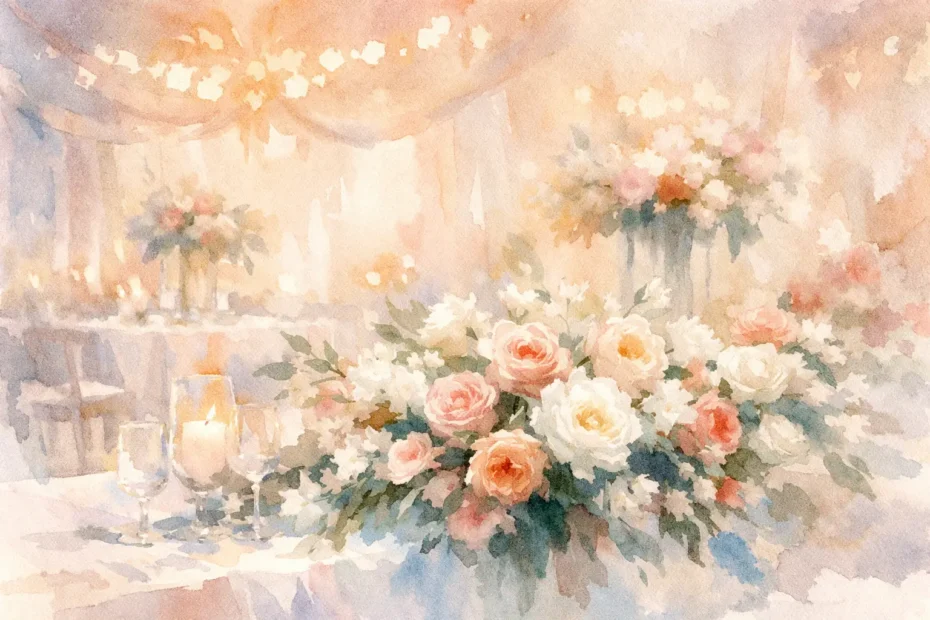
The reception is where your flowers start doing quiet, powerful work. Guests have already seen the ceremony, but the reception is where they settle in, look around, and feel the atmosphere you created. A thoughtful guide to reception floral styling is really a guide to shaping that feeling – romantic, joyful, refined, relaxed, or somewhere beautifully in between.
Reception florals are not just centerpieces on tables. They frame the room, soften hard lines, connect your color palette, and help every detail feel intentional. When they are planned well, guests may not name each floral choice, but they absolutely notice the result. The room feels finished. It feels like you.
What reception floral styling really includes
When couples first begin planning reception flowers, they often think in one category: centerpieces. Centerpieces matter, of course, but styling a reception well means looking at the entire visual experience. Guest tables, sweetheart or head tables, cocktail tables, bars, escort card displays, cake tables, welcome signs, and lounge areas all contribute to the floral story.
That does not mean every surface needs flowers. In fact, one of the most elegant decisions is knowing where to focus and where to let the room breathe. A well-styled reception usually has a few key floral moments supported by quieter accents. That balance keeps the design from feeling flat, but it also prevents the space from feeling crowded.
A floral designer will usually think in layers. There is the main floral statement, the supporting floral rhythm, and the finishing detail. Large arrangements might anchor the room. Mid-scale flowers may repeat color and shape across guest tables. Smaller touches can tie in candles, linens, glassware, and rentals so nothing feels disconnected.
A guide to reception floral styling starts with the room
Before choosing blooms, it helps to understand what the room needs. A ballroom with tall ceilings often benefits from designs that draw the eye upward. A cozy restaurant reception may call for lower, more intimate arrangements that suit the scale of the space. A modern venue with clean architecture might need softer, garden-inspired movement to feel warm. A naturally beautiful venue may need much less floral volume than you expect.
This is where floral styling becomes more than ordering flowers. It becomes design. The right choices depend on ceiling height, table size, lighting, chair style, linen color, and even how guests will move through the room. Tall centerpieces can be stunning, but if the venue is already visually busy, lower and more sculptural florals may feel more polished. Low arrangements can be romantic and conversational, but in a large room, they sometimes need candlelight or grouped vessels to hold their own.
There is always a trade-off. Grand floral pieces create drama, but they also claim more of the budget. Simpler designs can feel airy and elegant, especially when the room itself already offers character.
Choosing your floral focal points
Not every floral area deserves equal attention. The most successful reception designs usually identify two or three places where florals should have the strongest impact. For many weddings, that is the guest tables and sweetheart table. For others, it may be a hanging installation over the dance floor, a floral entry display, or a beautifully styled bar.
Think about where guests will look longest and where photographs will be taken most often. The head table is usually worth special attention because it appears in so many images. The cake table can also benefit from floral framing, especially if the cake design is simple. Cocktail hour spaces often need less floral weight than the main reception room, but a few intentional touches can make the transition feel smooth and cohesive.
If your budget is limited, this is where prioritizing matters most. It is often better to invest in a few memorable floral moments than to spread the budget so evenly that nothing stands out.
Centerpieces: low, tall, or mixed?
This is one of the most common questions, and the answer depends on the room and the mood you want. Low centerpieces feel welcoming and lush. They work beautifully for garden-style designs, encourage conversation, and pair well with layered candlelight. Tall centerpieces bring scale and elegance, especially in larger venues where low arrangements may visually disappear.
A mix of low and tall centerpieces can create lovely movement across the room, but only when there is a clear design connection between them. The color palette, flower varieties, and vessel style need to feel related. Otherwise, the room can look less curated than intended.
If you love variety, mixed centerpieces are often a strong choice. If you want a more tailored look, repeating one centerpiece style across all guest tables can feel calm, refined, and very intentional.
Let your color palette guide the flowers
Reception florals should feel connected to your overall celebration, not separate from it. Your color palette is one of the clearest ways to create that connection. This does not mean every flower must exactly match the bridesmaid dresses or printed paper goods. In fact, floral design often looks more natural when it interprets a palette rather than copies it.
Soft neutrals can feel timeless, but they need texture and tonal variation to avoid looking flat. Bold color palettes can be unforgettable, but they benefit from restraint in placement so the room still feels elevated. Pastels feel romantic and airy, though they may need stronger accents in large spaces to keep the design from fading into the background.
Season also matters. A spring-inspired palette in late fall can still be beautiful, but flower availability and pricing may shift. This is one reason custom floral design is so valuable. A skilled designer can preserve the feeling you want, even if specific blooms are not ideal for the season.
Texture is what makes flowers feel luxurious
Many people focus first on color, but texture is often what gives reception florals their richness. Garden roses, ranunculus, lisianthus, stock, hydrangea, branching elements, trailing greenery, berries, and dried accents all create different visual effects. The most beautiful designs usually combine soft shapes, airy movement, and enough structure to feel polished.
If your style leans romantic, you may love layered petals and naturally draping forms. If you prefer a cleaner, modern look, fewer flower varieties with intentional shape can be more effective. Neither approach is better. It simply depends on the story you want the room to tell.
Candlelight, rentals, and floral styling belong together
Flowers rarely work alone. Reception styling becomes much more compelling when florals are designed with candles, vessels, linens, and decor rentals in mind. The glow of candlelight can make even modest floral arrangements feel fuller and more atmospheric. A beautiful compote, pedestal vase, or bud vase collection can shift the mood from rustic to classic to contemporary.
This is where cohesion matters. If your florals are soft and organic but your vessels are stark and industrial, the look may feel unsettled unless that contrast is intentional. If your linens are highly patterned, the floral design may need more editing so the table does not feel visually crowded.
Good styling is often about restraint as much as abundance. Sometimes the prettiest table is not the one with the most flowers. It is the one where flowers, candles, and tabletop details feel like they belong to the same story.
Budgeting with beauty and intention
A realistic guide to reception floral styling should talk honestly about budget. Reception flowers can be transformative, but costs rise quickly when installations, premium blooms, and large guest counts are involved. That does not mean beautiful design is out of reach. It means your priorities should be clear from the start.
If floral impact matters most to you, direct your budget toward the spaces guests will remember and photographs will revisit. Repurposing ceremony flowers at the reception can also be a smart choice, depending on timing and logistics. Bridesmaid bouquets may accent the head table. Ceremony aisle flowers may move to the bar or escort display. Larger ceremony pieces can sometimes be reimagined in the reception room.
The key word is sometimes. Repurposing sounds simple, but it depends on setup windows, labor, transportation within the venue, and how those pieces were designed in the first place. A dependable floral partner will be honest about what is realistic and what may create more stress than savings.
Why personal style should lead every decision
The most memorable reception florals are not the ones that copy a trend perfectly. They are the ones that feel personal. Maybe that means airy garden flowers with a just-picked softness. Maybe it means classic white arrangements with elegant structure. Maybe it means warm seasonal color, fruit accents, or floral details that nod to family traditions.
At An English Garden Wedding & Event Florals, that personal layer is often where the design becomes most meaningful. Flowers can echo your setting, your season, your story, and the feeling you want guests to carry home.
If you are planning a reception in Tinley Park, Frankfort, or the surrounding suburban Chicago area, it is worth choosing a floral design approach that considers more than the tables alone. The room should feel welcoming from the entrance to the final dance. Every floral choice should support that experience, not compete with it.
The best reception flowers are not just pretty details. They create atmosphere, hold emotion, and help your celebration feel fully alive the moment your guests walk in.