
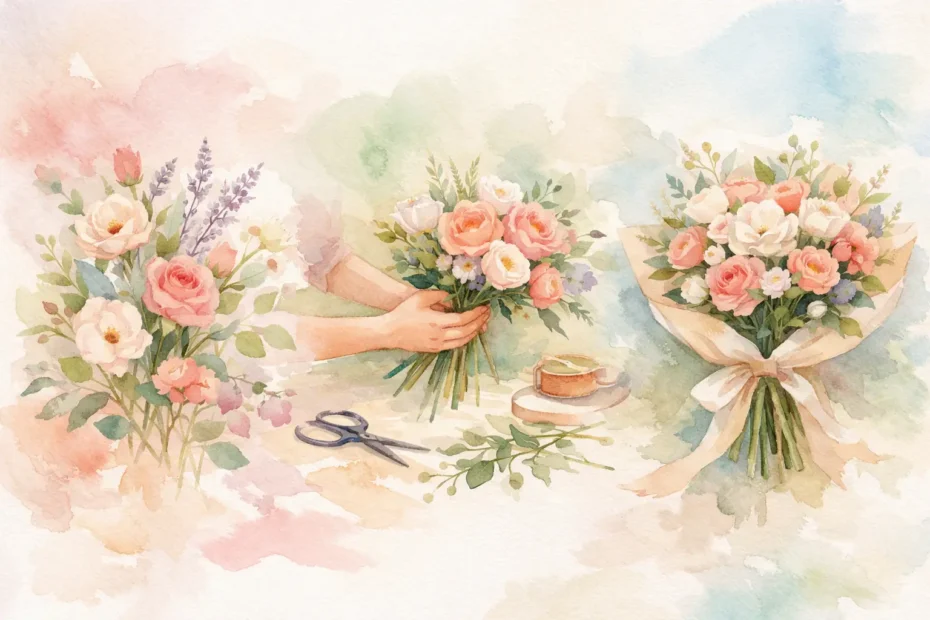
A bouquet may look effortless in photos, but the custom bouquet process is where emotion, design, and logistics quietly come together. The right bouquet does more than match a dress or fit a color palette. It carries the feeling of the day, ties together the floral story, and gives you something deeply personal to hold in one of life’s biggest moments.
For couples and event hosts, that is often the difference between buying flowers and working with a floral designer. A custom bouquet is not pulled from a standard recipe. It is shaped around your style, your venue, the season, and the way you want your celebration to feel when everything is finally in place.
What the custom bouquet process is really about
At its heart, the custom bouquet process is a design conversation. It starts with inspiration, but it should never stop there. Pretty reference photos are helpful, yet they only tell part of the story. A designer also looks at proportion, movement, texture, color balance, bloom size, flower availability, and how your bouquet will connect with everything around it.
That larger view matters more than many people expect. A bouquet that looks lovely on its own may feel too small in a grand ballroom, too formal for a garden ceremony, or too heavy for a fitted gown with delicate details. Custom work allows those decisions to be made with intention rather than guesswork.
This is also where personality comes in. Some clients are drawn to airy, gathered stems with a just-picked feeling. Others want a bouquet that feels sculptural and refined, with cleaner lines and a more polished silhouette. Neither is better. What matters is that the design reflects you and feels at home in your event setting.
Step 1: Starting with your story and vision
The first stage usually begins with a consultation. This is where you share the practical pieces – date, venue, season, dress style, event type, and budget – along with the emotional ones. Maybe you love the softness of an English garden look. Maybe you want flowers that feel modern but not stark. Maybe your grandmother carried roses, and you want that history woven in somewhere meaningful.
Those details shape the direction more than people realize. A bouquet for a black-tie winter wedding will be approached differently than one for a summer shower or an intimate backyard ceremony. The same blush palette can read romantic, classic, whimsical, or contemporary depending on the flowers selected and the way they are arranged.
During this stage, inspiration photos are useful, but they work best as a starting point. Floral design is not copy-and-paste. Lighting, seasonality, scale, and flower market conditions all affect the final design. A strong florist helps translate what you love about an image – maybe the movement, softness, or color layering – into something that feels personal rather than imitated.
Step 2: Choosing shape, palette, and floral personality
Once the vision is clear, the bouquet begins to take form on paper before it ever takes form in hand. This is where decisions about silhouette and floral style become important. Do you want a rounded bouquet, a looser gathered shape, something organic and asymmetrical, or a more tailored design with classic balance?
Color is also more nuanced than many clients expect. White is rarely just white. It may lean ivory, cream, bright white, or soft blush depending on the flowers used. Pink might feel playful, elegant, muted, or dramatic. A bouquet often looks richest when it includes variation – lighter and deeper tones, soft neutrals, and touches of texture that keep the arrangement from feeling flat.
Flower selection follows the same principle. Garden roses, ranunculus, lisianthus, peonies, dahlias, sweet peas, and specialty greenery each bring a different mood. Some flowers add softness. Some add structure. Some create movement. Some are included because they carry personal meaning. The beauty of a custom approach is that these choices are made to support the whole story, not just fill space.
Step 3: Balancing beauty with seasonality and budget
This is one of the most important parts of the custom bouquet process, and one of the least glamorous. Dream bouquets still need to live in the real world.
Flower availability changes with the season, and pricing can shift based on weather, demand, and supply. Peonies in late spring are a different conversation than peonies in fall. Certain specialty blooms may be possible, but they can affect the overall floral budget quickly. That does not mean you have to give up beauty. It means thoughtful design matters.
An experienced florist can often suggest alternatives that preserve the feeling you want. If a specific flower is out of season or too costly, the answer may be another bloom with a similar softness, shape, or color story. Sometimes the better decision is focusing your investment on the bouquet and ceremony pieces while simplifying supporting florals. Other times, a mixed design with premium focal flowers and more budget-friendly supporting blooms creates the best balance.
This is where trust becomes essential. The goal is not to force your vision into a limitation. It is to design wisely so your flowers feel abundant, intentional, and aligned with your priorities.
Step 4: Designing for the dress, the person, and the moment
A bouquet should never be designed in isolation. It should complement the person carrying it.
Dress details matter. A gown with intricate lace, beading, or appliqué may pair beautifully with a bouquet that has softness and texture without overwhelming the silhouette. A minimalist dress might welcome stronger floral shape or a slightly more architectural look. Height can matter too. So can bouquet size, ribbon treatment, and stem finish.
Then there is the human side. Some people want a bouquet that feels light and natural in their hands. Others love a fuller statement piece. Some want a cascading shape for drama, while others prefer something restrained and romantic. The right florist pays attention not only to what photographs beautifully, but also to what feels comfortable and true to you.
That same thinking applies beyond weddings. A custom bouquet for a shower host, milestone celebration, or corporate event may need to reflect the event tone in a different way. The design can still feel lush and personal while aligning with the formality, venue, and purpose of the occasion.
Step 5: Bringing the custom bouquet process to life
When event week arrives, the planning turns into hands-on floral artistry. Flowers are conditioned, hydrated, and carefully prepared so they open beautifully and hold well. This behind-the-scenes work is a major part of quality, even though most clients never see it.
The bouquet is then composed stem by stem. Shape, spacing, texture, and color placement are adjusted in real time. This is where floral design becomes both art and discipline. A bouquet needs movement, but not mess. It needs fullness, but not heaviness. It should feel natural, though every choice is deliberate.
Final details matter here too. Ribbon color, wrapping style, stem length, and finishing touches all influence the polished look. A romantic silk ribbon trailing softly creates a different mood than a clean satin wrap. Small choices can shift the entire personality of the bouquet.
Why communication matters as much as flowers
The best custom bouquet experience is not only about beautiful blooms. It is about feeling understood.
Clear communication helps clients make decisions with confidence. It keeps expectations realistic, especially when flower substitutions may be needed due to seasonality or market conditions. It also creates room for collaboration, so the final bouquet feels aligned with your vision while benefiting from professional guidance.
For weddings and events in the suburban Chicago area, where venues and styles can vary widely from elegant ballrooms to intimate garden-inspired settings, that guidance is especially valuable. A bouquet has to do more than look lovely in a single close-up. It needs to belong in the larger visual story of the day.
That is why custom floral design works best when it is personal, not transactional. You are not simply choosing flowers from a menu. You are building a piece that connects memory, mood, and design into something you will remember long after the petals have faded.
A beautiful bouquet should feel like it could only have been made for your celebration. When the process is thoughtful from the beginning, that feeling is exactly what comes through the moment you hold it.