
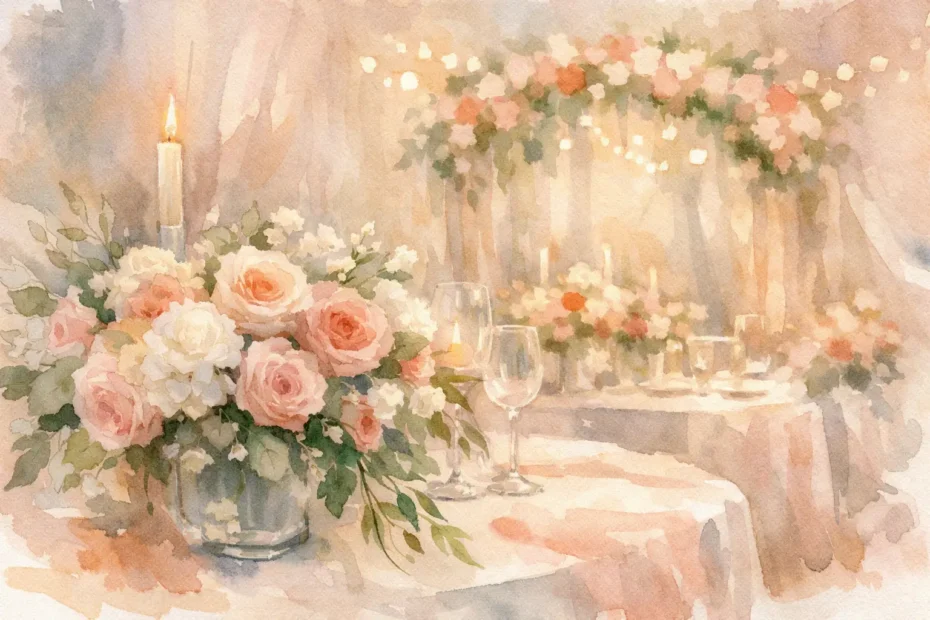
A beautiful reception rarely comes together because every table has flowers. It comes together when the flowers feel like they belong to the same story. To design cohesive reception flower decor, you need more than pretty blooms – you need a clear visual thread that connects the room, supports the mood, and reflects the people being celebrated.
That does not mean every arrangement should match exactly. In fact, the most memorable reception florals usually have variation. The key is intention. When color, shape, texture, and placement are working together, the room feels polished, welcoming, and emotionally resonant from the first look to the last dance.
What cohesive reception flower decor really means
Cohesion is not sameness. A reception can include lush centerpieces, delicate cocktail arrangements, statement bar flowers, and a dramatic sweetheart table installation without looking busy or disconnected. The secret is that each piece should feel related.
Think of your florals the way you would think about a well-designed home. Not every room has the same furniture, but the style feels consistent. The same idea applies to event flowers. A low, garden-style centerpiece and a suspended floral accent can absolutely live in the same reception space, as long as they share design cues such as palette, movement, bloom choice, or overall mood.
For weddings and milestone events, this matters because flowers do more than decorate. They support the atmosphere. Romantic florals create softness. Modern florals can sharpen a clean room. Organic floral styling can make a ballroom feel more personal and alive. When the reception flowers feel cohesive, guests may not know exactly why the room feels so good – they simply feel it.
Start with the feeling, not the flower
The best way to design cohesive reception flower decor is to begin with the emotional tone of the celebration. Before choosing roses, hydrangeas, or ranunculus, ask what the reception should feel like.
Is it candlelit and intimate? Fresh and airy? Classic and tailored? Joyful and colorful? Refined with a touch of garden romance? That answer should shape every floral decision that follows.
This is where many event designs drift off course. Someone falls in love with one dramatic centerpiece image, then another bouquet style, then a trendy ceremony arch, and soon the collection is beautiful but disconnected. Inspiration is helpful, but it needs editing. A floral design plan should protect the feeling you want, not chase every lovely image you save.
If your vision is soft and romantic, flowers with gentle movement, layered petals, and natural texture often support that mood better than rigid, architectural designs. If you want something more contemporary, cleaner lines and more restrained color blocking may be a better fit. There is no single right answer. It depends on your venue, your personal style, and how formal or relaxed you want the evening to feel.
Use color as your anchor
Color is usually the fastest way to create unity across a reception space. It does not require every arrangement to use the exact same flowers, but it does ask for discipline.
A focused palette tends to feel more elevated than one that tries to include everything. That might mean shades of ivory, blush, and soft green for a timeless garden look. It might mean layered neutrals with a deeper accent like plum or terracotta. It might mean fresh whites and greens with small moments of blue for a clean, classic reception.
The most successful palettes usually have a lead color, supporting tones, and a clear sense of where contrast will appear. Without that structure, arrangements can feel random from table to table.
How to keep a palette from feeling flat
Even a restrained palette needs dimension. That comes from using tonal variation and texture rather than simply adding more colors. Cream, white, taupe, soft sage, and dusty blush can create an incredibly rich look when combined thoughtfully. The room feels layered instead of repetitive.
If you love bold color, cohesion becomes even more important. Strong palettes are stunning when they are balanced with purpose. One bright focal color repeated throughout the room often works better than several unrelated bold tones competing for attention.
Scale matters more than most people expect
Reception flowers should fit the room. A centerpiece that looks lush in a photo may feel tiny in a grand ballroom. A large floral installation may overwhelm a more intimate restaurant reception. Cohesion depends in part on proportion.
This applies not only to the overall size of arrangements, but also to how floral moments relate to one another. If guest tables are very understated while the sweetheart table is extremely dramatic, the contrast can be beautiful. But if every area is competing for attention at full volume, the room can start to feel visually tired.
A well-balanced reception usually has a rhythm. Some areas are designed to make a statement, while others provide softer supporting detail. That contrast helps guests notice the design rather than feel surrounded by too much of it.
Create a focal hierarchy
Every reception benefits from knowing where the eye should go first. Often that is the head table, sweetheart table, escort card display, cake table, or bar. Once those focal areas are established, the surrounding florals can echo the same language at a different intensity.
This is one of the smartest ways to design cohesive reception flower decor without overspending. You do not need maximal flowers everywhere. You need the right flowers in the right places, with enough continuity to make the entire room feel considered.
Repeat key design elements throughout the space
Repetition is what makes separate floral pieces feel connected. That repetition can show up in several ways: a signature bloom, a specific greenery, a shape, a color accent, or even a style of movement.
For example, if your centerpieces have airy garden movement with trailing jasmine vine and delicate reflexed roses, that same softness can appear on the bar, cake flowers, and sweetheart table. If your reception design features tighter, more sculptural floral groupings, you would repeat that cleaner silhouette elsewhere.
This does not mean copying and pasting one arrangement onto every surface. It means building a family of designs that speak the same visual language.
Match the flowers to the venue, not just the mood board
Venue style changes everything. Flowers that look perfect in a bright conservatory may feel out of place in a moody industrial loft. A classic banquet hall may need florals that add softness and movement, while a naturally beautiful venue may call for more restraint.
Lighting also matters more than people expect. Soft candlelight can make pale flowers glow. Overhead ballroom lighting may require stronger contrast or fuller textures to keep arrangements from disappearing. In suburban Chicago venues, where reception spaces can range from elegant ballrooms to modern event spaces and country clubs, thoughtful floral styling helps bridge the gap between architecture and atmosphere.
The strongest floral designs respond to the room they live in. They do not ignore it.
Think beyond the guest tables
When people picture reception flowers, they usually think centerpieces first. Centerpieces matter, of course, but cohesion often comes from the supporting details.
A floral plan feels more complete when there are intentional moments across the room. That could include bud vases on cocktail tables, floral accents on signage, soft flowers near the candles on the bar, or a refined arrangement near the seating chart. These details help guide guests through the event experience.
At the same time, not every surface needs flowers. Sometimes negative space is what gives floral design its elegance. If every corner is filled, the eye has nowhere to rest. It is always a balance.
Where couples often get stuck
The most common challenge is trying to satisfy too many ideas at once. Garden romance, modern minimalism, boho texture, black-tie elegance – each of these can be beautiful, but together they do not always make sense.
Another sticking point is budget distribution. Many couples assume all tables should be treated equally, when in reality a mixed approach often creates a more elevated result. Alternating centerpiece styles, concentrating floral investment in high-impact areas, and choosing select statement pieces can create a fuller experience than spreading the budget too thin.
This is also where an experienced florist becomes more than a vendor. A thoughtful design partner helps edit, refine, and translate inspiration into a reception that feels personal and complete. At An English Garden Wedding & Event Florals, that guidance is part of the artistry. The goal is not simply to fill the room with flowers, but to shape a setting that feels unmistakably yours.
A cohesive room always feels more generous
Guests may remember a dramatic installation or a lovely centerpiece, but what lingers is the feeling of the room as a whole. When the reception flowers are cohesive, the celebration feels calm, intentional, and beautifully cared for. That kind of design does not shout for attention. It welcomes people in.
If you are planning your reception, start by choosing the story you want the room to tell. From there, let color, scale, and repetition carry that story through every floral detail. The result is not just decor that looks lovely in photographs. It is a space that feels like your celebration from every angle.