
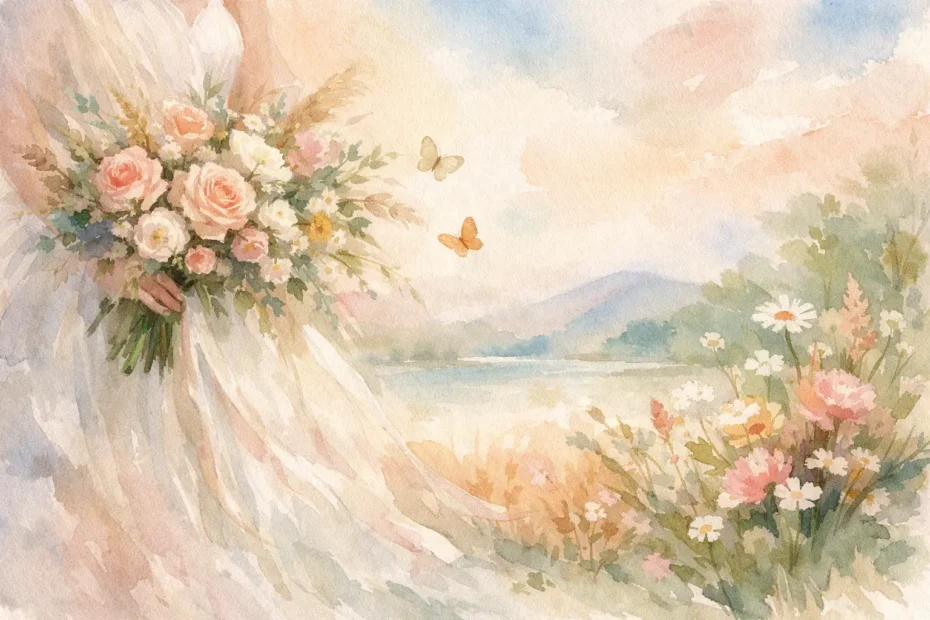
A just-opened garden rose, a winding stem of jasmine, a handful of meadow-like blooms gathered as though they were waiting just beyond the ceremony aisle – nature inspired wedding flowers have a way of making a celebration feel alive. They are not simply decorative. They create mood, soften a room, and give guests a visual sense of the love story unfolding around them.
For couples who want their wedding to feel personal rather than prescribed, this style offers wonderful freedom. It can be refined and romantic, quietly organic, wildly colorful, or softly neutral. The goal is not to recreate the outdoors exactly. It is to bring its movement, texture, and sense of ease into each meaningful moment of the day.
What Makes Nature Inspired Wedding Flowers Different?
Nature-inspired design favors flowers that feel as though they grew together. Instead of every bloom sitting at the same height or facing the same direction, arrangements have gentle variation. Some stems reach outward, others nestle close, and foliage creates depth between focal flowers. The result is polished, but never stiff.
This approach is often associated with garden weddings, though it works beautifully in ballrooms, country clubs, private homes, and modern event spaces throughout the suburban Chicago area. Flowers can soften clean architectural lines, warm a formal reception room, or make a simple tent feel like an intimate gathering under a canopy of blooms.
It is also a deeply flexible design language. A bride who loves old-world romance may be drawn to fragrant roses, sweet peas, ranunculus, and trailing greenery. A couple planning a contemporary celebration may prefer sculptural branches, orchids, textural grasses, and tonal blooms in a more restrained palette. Both can feel connected to nature when the composition has movement and intention.
Begin With the Feeling, Not a Flower Checklist
Pinterest can be helpful for identifying what you are drawn to, but a list of exact flowers is rarely the best place to begin. Seasonal availability, weather, color variation, and market conditions all affect what is possible. More importantly, individual stems do not tell the whole story. The feeling of the arrangement does.
Think first about the atmosphere you want guests to experience. Is your day soft and candlelit, full of spring color, or elegant with a little wildness at the edges? Do you picture an English garden after rain, a late-summer field, a woodland gathering, or a crisp autumn celebration? These impressions give your floral designer a more meaningful foundation than a dozen disconnected inspiration photos.
Your venue matters, too. A ceremony surrounded by mature trees may call for florals that complement the landscape without competing with it. A neutral ballroom may give you room for fuller color, abundant foliage, and a statement installation. The most successful floral plan considers the setting, your attire, the season, and the way each design moment will be seen and photographed.
Let Your Color Palette Have a Little Breathing Room
Nature rarely presents color in flat blocks. A peach garden rose may carry touches of blush and apricot. A white flower may read creamy against greenery and bright against candlelight. Allowing a palette to include neighboring tones makes arrangements feel more dimensional and natural.
For example, a palette built around ivory and soft blue might also include pale butter yellow, dusty green, and a touch of lavender. A fall design with rust and burgundy can become more luminous with mauve, caramel, plum, and olive foliage. This does not mean every color needs to appear everywhere. It means the flowers can transition gracefully from bouquet to ceremony to reception.
Build Texture Into Every Floral Moment
Texture is one of the quiet details that makes an arrangement memorable. It is the difference between a bouquet that looks pretty and one that makes you want to lean closer. Delicate spirea, airy astrantia, feathery astilbe, berries, ferns, flowering branches, and interesting foliage can all bring depth to a design.
Your bridal bouquet is a natural place to begin. It should feel beautiful in your hands and harmonious with your gown, not so large or dense that it overwhelms you. A nature-inspired bouquet might combine focal blooms with smaller flowers, loose foliage, and a few graceful lines that create movement. The overall shape can be gathered and organic while still feeling intentional enough for a formal wedding.
For attendants, a simpler version of the same floral story often creates the most cohesive effect. Smaller bouquets can echo the palette and texture of the bridal bouquet without looking identical. Boutonnieres and corsages deserve that same care. They may be small, but they appear in close-up photos and help carry the design through the wedding party.
Make the Ceremony Feel Like the Beginning of the Story
Ceremony flowers should frame the two of you, not distract from the moment. Grounded meadow arrangements, floral pillars, aisle meadows, and softly draped urns are lovely choices for a natural style. They can create the feeling that the flowers are growing from the space rather than being placed there for a few hours.
There are practical choices to consider here. A full floral arch makes a beautiful visual statement, but it requires more flowers, labor, and mechanics than designs that are concentrated at the base or on one side. If your budget needs to work hard, investing in two substantial ceremony arrangements that can be moved to the reception is often a thoughtful alternative. Repurposing is not always possible, especially when timing is tight, but it can be planned into the design from the start.
Carry the Garden Into the Reception
At the reception, nature-inspired wedding flowers are especially effective when they create layers rather than a single focal point on every table. Low centerpieces filled with texture invite conversation across the table. Bud vases can create a loose, collected feeling with less floral density. A mix of low arrangements and elevated designs adds rhythm to a larger room.
Candles are an important partner to this style. Their warm light brings out the subtle colors in petals and foliage, making flowers feel even more romantic after sunset. Linens, tableware, menu cards, and rentals also shape the final look. A floral design is at its best when these pieces are considered together, whether the vision calls for classic garden charm, European-inspired romance, or something more modern and minimal.
Do not overlook the places guests naturally pause: the welcome table, seating display, bar, cake table, and sweetheart table. A smaller floral gesture in these areas can make the entire event feel considered. Often, one thoughtfully designed focal moment has more impact than scattering a little bit of everything throughout the room.
Work With the Season Instead of Against It
Seasonal flowers are not a limitation. They are part of what gives a wedding its sense of place and time. Spring offers tender color and airy blooms. Summer brings generous garden roses, hydrangea, cosmos, and lush foliage. Autumn invites dahlias, textured grasses, branches, and richer tones. Winter can be remarkably romantic with evergreen, hellebore, amaryllis, berries, and unexpected blooms in soft neutrals.
That said, “seasonal” does not always mean locally grown, and popular flowers may be available beyond their traditional season through floral markets. Your priorities determine the right approach. If a particular flower carries personal meaning, it may be worth sourcing. If you care most about a natural, abundant look, giving your designer creative flexibility with the best flowers available in your palette often produces the strongest result.
Weather also deserves a place in the conversation. Outdoor summer ceremonies may require blooms that tolerate heat, while winter celebrations need careful planning for transport and installation. An experienced floral team accounts for these details so your flowers look fresh when it matters most.
Trust the Design Process
Custom wedding florals are a collaboration. Share the details that make your celebration yours: the place you got engaged, a favorite season, your grandmother’s garden, the color you always wear, or the mood you hope people remember. These small pieces of your story can inspire choices that feel far more meaningful than a trend.
At An English Garden Wedding & Event Florals, the design process begins with listening. From your personal flowers to ceremony pieces, reception centerpieces, and finishing touches, every element can be shaped to feel connected. Clear communication and careful planning allow the beauty to feel effortless on the day itself.
When you are choosing flowers, save the images that make you feel something, then let the details of your own celebration guide the rest. The loveliest arrangements do more than match a color palette. They make the room feel like it was made for your moment.