
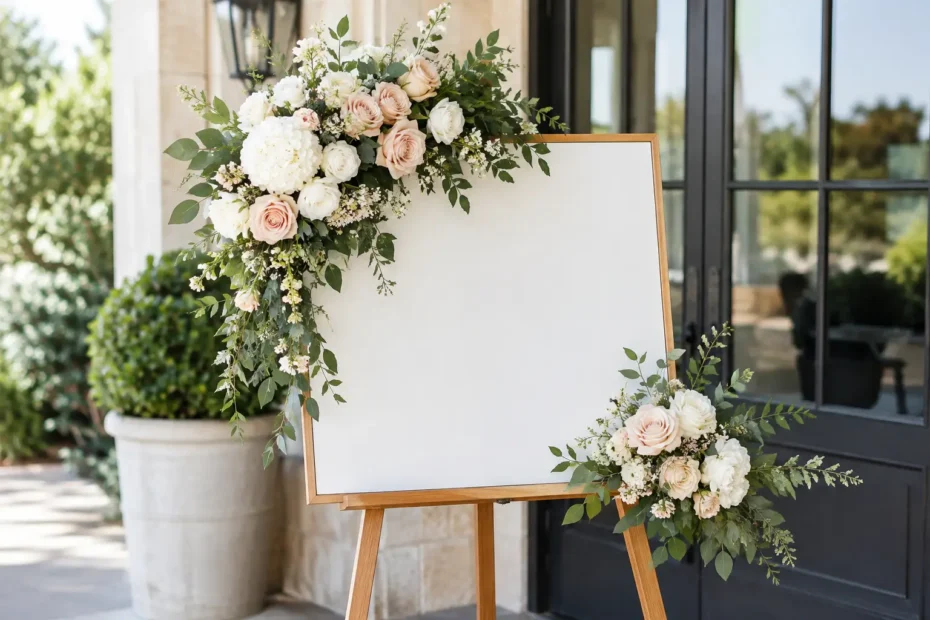
A welcome sign does more than point guests toward the ceremony. It creates the first real glimpse of your celebration: the colors, the mood, and the care behind every detail. When you style welcome sign florals with intention, this practical piece becomes a beautiful opening chapter to your wedding story.
Whether your celebration is a garden-inspired gathering, a candlelit ballroom reception, or a joyful backyard shower, flowers can turn an ordinary sign into a moment your guests notice, photograph, and remember. The key is not simply adding more blooms. It is choosing arrangements that feel connected to everything else you have planned.
Start With the Feeling You Want Guests to Have
Before selecting flowers, consider what you want people to feel as they arrive. A loose meadow of cosmos, sweet peas, and delicate greenery feels lighthearted and romantic. Roses, ranunculus, and trailing smilax can create a classic garden feeling with a little more formality. For a modern celebration, an asymmetrical design with sculptural blooms and intentional negative space may feel more like you.
Your welcome sign should introduce the visual language of the day. If your bridal bouquet is airy and movement-filled, a tightly packed, formal sign arrangement may feel disconnected. If the reception is rich with moody burgundy, plum, and warm candlelight, the entrance is a lovely place to offer that first hint of drama.
It also helps to think about the setting. A floral design that looks dreamy against a white draped backdrop can disappear against a lush outdoor lawn. In a garden venue, a sign may need stronger color or a distinctive frame to stand out. At an indoor venue, the arrangement can bring softness and life to a space that may otherwise feel more structured.
Style Welcome Sign Florals Around the Sign Itself
The sign material, shape, and lettering guide the floral design. An arched acrylic sign offers a clean, modern canvas, while a vintage gold frame brings immediate romance. Wood signs can feel warm and relaxed, especially for rustic or garden-inspired celebrations. Mirrors are lovely for formal events but need careful placement so reflections and glare do not make the message difficult to read.
Flowers should complement the sign, not cover its purpose. Your guests need to be able to see the welcome message, find the event location, or read an unplugged ceremony request without searching through petals. A talented floral designer will consider the sign’s proportions and place the arrangement where it creates a visual frame without crowding the lettering.
A corner installation is often the most versatile choice. A floral moment flowing from one upper corner down the side of the sign adds movement while leaving ample room for words. A grounded design at the base works beautifully for large signs or signs displayed on an easel. If your sign is wide enough, florals on one side balanced by a small accent on the opposite lower corner can create a polished, artful composition.
Full floral borders can be breathtaking, but they are not always necessary. They generally require a larger flower investment and work best when the sign is a central design feature, such as an entry statement at a tented reception or a ceremony welcome display. For a smaller shower or intimate wedding, a single lush arrangement may make a stronger impression than a crowded border.
Choose Flowers That Echo Your Larger Floral Plan
A welcome sign is an ideal place to repeat a few signature blooms from the rest of your day. This creates a sense of continuity from the entrance to the ceremony, cocktail hour, and reception. It does not need to match every arrangement exactly. In fact, a welcome display can be a chance to use a more playful proportion or a few textural elements that would not be practical in a bouquet.
For example, if your wedding flowers feature white garden roses, blush ranunculus, and soft blue delphinium, those same ingredients can appear at the sign with trailing greenery and a few airy stems. If you are planning a bright summer palette, the welcome display might introduce your happiest colors in a slightly more abundant, garden-gathered design.
Seasonality matters here. Peonies create a beautiful statement in their natural spring season, while dahlias bring rich texture in late summer and fall. Some favorite flowers can be sourced outside their peak season, but availability and cost may vary. Being open to the feeling of a flower, rather than insisting on one exact variety, often gives you the most beautiful and thoughtful result.
Think About Placement Before Finalizing the Design
Even the most beautiful welcome sign florals need the right home. Place the display where guests naturally pause, not where they will rush past it on the way to parking or the bar. A ceremony entrance, venue foyer, or cocktail hour transition is usually ideal.
Consider traffic flow, too. A floor-level floral arrangement needs enough room that long dresses, strollers, and guests navigating the space will not brush against it. Outdoors, the design should be positioned on level ground and secured for wind. Direct afternoon sun can be challenging for some flowers, particularly during a Chicago-area summer wedding, so shade or a protected location may help the arrangement stay fresher longer.
Lighting deserves just as much attention. Daytime signs benefit from natural light, but avoid placing them where strong backlighting makes the lettering hard to photograph. For an evening event, candles nearby or a soft spotlight can give the florals a warm glow. Open flames should always be placed thoughtfully and safely, especially around delicate greenery, fabric, or dried floral elements.
Add Details That Make the Display Personal
The welcome sign itself can carry your names, date, a favorite phrase, or a gentle note inviting guests to enjoy the day. Florals make that message feel more personal when the details are chosen with restraint.
A small basket of ceremony programs, a vintage table, a fabric runner, or a pair of lanterns can add dimension. If you are serving signature drinks, a coordinating sign near the bar can carry a smaller version of the same floral recipe. For showers and milestone celebrations, the entrance display may also hold a guest book, cards, or a sweet message for the guest of honor.
Try not to add every decorative idea at once. Florals, signage, rentals, candles, and personal items all compete for attention if they are not edited carefully. A beautiful welcome moment usually has one clear focal point, a cohesive color story, and enough breathing room for guests to take it in.
Make the Investment Work Beyond the Entrance
A welcome sign arrangement does not have to remain at the entrance all day. With a plan in place, it can be moved after guests are seated for the ceremony or after cocktail hour begins. It may become a sweetheart table accent, a display near the cake, or a finishing touch at the bar.
This option depends on the mechanics of the design, the timeline, and who will handle the move. A freestanding arrangement is often easier to repurpose than flowers attached directly to a sign or frame. Discussing this early with your florist helps ensure the piece is designed for both its first setting and its second life.
At An English Garden Wedding & Event Florals, we see welcome displays as more than an entrance accessory. They are an opportunity to greet your favorite people with a glimpse of the happiness, personality, and beauty you have gathered to celebrate.
Your sign does not need to be the biggest floral moment of the day to be meaningful. It simply needs to feel like you. When the blooms, message, setting, and season come together, guests will feel the warmth of your celebration before they have even taken their seats.