
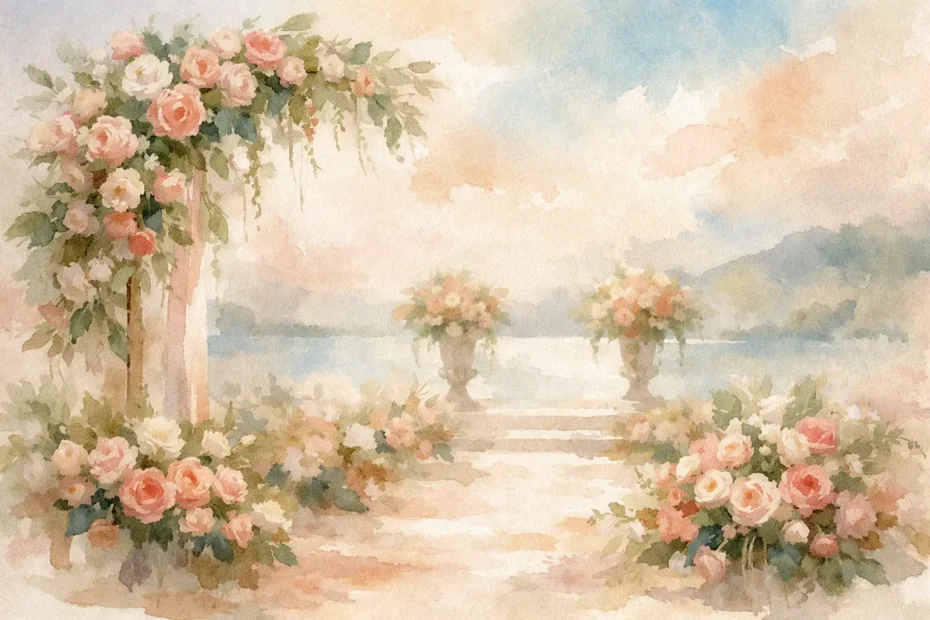
The moment you step into your ceremony space, flowers should make it feel like the setting has been waiting just for you. Learning how to style ceremony flowers is less about filling every available surface and more about creating a beautiful sense of arrival: a thoughtful aisle, a meaningful place to exchange vows, and details that make the space feel personal from every seat.
Whether you are marrying beneath a garden-inspired arch, in a softly lit ballroom, or at a historic suburban Chicago venue, ceremony flowers can tell the first visual chapter of your day. The most memorable designs balance romance with purpose, honoring your style while working beautifully with the room, the season, and the way your guests will experience the moment.
Begin With the Moment You Want to Create
Before choosing blooms, consider the feeling you want guests to have when the ceremony begins. Do you picture an intimate garden gathering with loose, natural movement? A refined, modern setting with sculptural blooms and a clean palette? Or a classic celebration filled with layered whites, lush greenery, and soft candlelight?
Your ceremony florals should support that vision without competing with it. A full floral arch may be perfect for a grand outdoor lawn, while low meadow arrangements can make a smaller indoor ceremony feel tender and inviting. The right design is not always the biggest one. It is the one that gives the space a clear point of view and keeps the focus on the two of you.
A helpful starting point is to select three words that describe the atmosphere you want to create. Romantic, organic, joyful. Timeless, airy, elegant. Colorful, whimsical, celebratory. Those words can guide every floral choice, from the flowers in your bouquet to the shape of your ceremony installation.
How to Style Ceremony Flowers Around Your Venue
A venue already has its own story. Ceremony flowers should enhance its best features rather than hide them.
Let the architecture lead
Look for the natural focal point of the space. It may be a fireplace, a picture window, a garden view, a staircase, a set of doors, or a dramatic wall. This is often where your floral investment has the greatest impact. Framing that feature with an asymmetrical installation, grounded arrangements, or an airy floral meadow creates a clear backdrop for your vows and photographs.
For a ceremony with a beautiful view, restraint can be especially powerful. A pair of grounded arrangements at the altar may add softness and dimension without blocking the landscape. In a space with a simple wall or minimal architecture, a fuller arch, floral frame, or elevated installation can establish the visual drama the room needs.
Consider the guest perspective
Flowers look different from the first row than they do from the back of the room. Think about what guests will see as they enter, where their eyes will travel during the processional, and what will appear behind you in photos.
Aisle flowers create an immediate experience for guests, but they should never make the aisle feel too narrow or interrupt movement. Altar flowers need enough height or fullness to read across the room, especially in a large space. Your floral designer can help map sightlines so every arrangement has a purpose, not simply a place to sit.
Work with the season, not against it
Seasonal flowers bring a ceremony to life with natural texture and a sense of place. Spring may invite flowering branches, tulips, ranunculus, and delicate garden roses. Summer can hold lush roses, sweet peas, cosmos, and hydrangea. Fall offers richly toned dahlias, amaranthus, and textural foliage, while winter ceremonies often shine with elegant roses, hellebore, evergreens, and unexpected accents.
This does not mean you must limit your palette to what grows locally in a particular month. It means allowing the season to influence the design can often create more beautiful results and a more thoughtful use of your floral budget.
Create a Floral Journey From the Aisle to the Altar
Ceremony flowers feel most polished when they are designed as a progression. Guests should notice a sense of gathering as they move closer to the vow space.
Start with the entrance. A welcome arrangement, a floral accent beside a sign, or a pair of planters can set the tone before anyone takes their seat. From there, aisle markers or meadow arrangements can build anticipation. They do not need to appear at every chair. Sometimes a design placed only near the front rows gives the ceremony a fuller look where it matters most.
At the altar, choose one strong floral statement rather than several competing ones. An arch can create a romantic frame, but it is not the only option. Grounded floral meadows feel lush and natural, especially when paired with candles or layered vessels. Two sculptural arrangements can offer an editorial, balanced look. A floral aisle that leads directly into a low, abundant ceremony garden creates a beautiful, immersive effect without the structure of an arch.
The scale depends on the space and your priorities. A large room may need a bolder focal point, while a chapel or intimate garden may be more beautiful with delicate, intentional touches. It also depends on how you want to reuse the flowers later, which can shape the design from the beginning.
Choose a Palette With Depth, Not Just Color
A floral palette is more than a list of colors. It is the relationship between shades, textures, flower forms, and greenery.
For a soft, romantic ceremony, consider building around tonal variations instead of relying on one exact shade. Blush, peach, warm ivory, and pale apricot create depth that a single pink may not. For a white wedding, layering creamy garden roses, crisp white blooms, soft gray-green foliage, and hints of pale yellow can prevent the design from feeling flat.
If you love color, give it room to breathe. One vivid accent – such as coral, raspberry, blue, or butter yellow – can feel more intentional when supported by softer companion tones. Colorful ceremony flowers are especially lovely when the rest of the setting is neutral, allowing the blooms to become part of the celebration’s personality.
Texture matters just as much. Open garden roses, delicate sweet peas, airy foliage, sturdy hydrangea, and trailing vines each bring a different kind of movement. Combining them creates the natural, gathered feeling many couples love. A more modern design may use fewer varieties and stronger shapes, such as calla lilies, orchids, anthuriums, or sculptural branches.
Plan for Repurposing Without Sacrificing the Ceremony
Repurposing ceremony flowers at the reception is one of the loveliest ways to extend their impact. It can also help you place more of your budget into a few well-designed statement pieces rather than spreading it too thinly.
Ground arrangements from the altar can often move to the head table, sweetheart table, cake display, bar, or reception entrance. Aisle flowers may become accents around lounge seating, signage, or the dance floor. Smaller arrangements can be gathered into a fuller display elsewhere in the room.
However, repurposing works best when it is planned realistically. Flowers need to be designed in movable vessels, the timeline must allow for a quick transition, and someone needs to coordinate the move while guests are enjoying cocktail hour. Very large installations or designs attached to venue structures may not be practical to relocate. A good floral plan considers both beauty and logistics before the wedding day arrives.
Don’t Forget the Details That Make It Feel Personal
The ceremony becomes yours through the details that reflect your story. Perhaps flowers from a family garden inspire the palette. Maybe you want to incorporate the bloom your partner gave you on your first date, honor a loved one with a small memorial arrangement, or include a meaningful ribbon or heirloom in your bouquet.
These touches do not need to be obvious to everyone to be powerful. They bring emotional depth to the floral design and make the ceremony feel like more than a beautifully decorated room. At An English Garden Wedding & Event Florals, the most rewarding designs begin with these personal conversations and grow into flowers that feel unmistakably connected to the celebration.
When deciding where to invest, prioritize the areas that will hold the most emotion and visibility: the altar, the aisle entrance, and the flowers you will carry. Then let your floral design create a gentle path toward the moment that matters most – the moment you look at one another and say yes.