
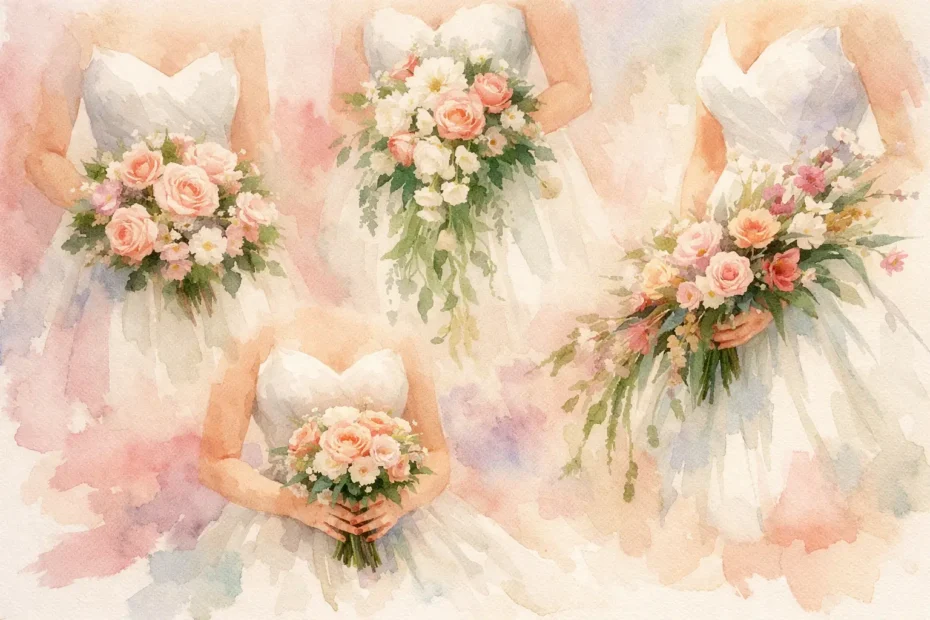
A bouquet does more than fill your hands during the walk down the aisle. It frames the dress, appears in nearly every close-up, and gives your wedding color palette a living, personal expression. The top bouquet shapes for brides each create a different feeling – from softly gathered and just-picked to polished, sculptural, and dramatic. Choosing the right one is less about following a trend and more about finding the silhouette that feels like you.
At An English Garden Wedding & Event Florals, we begin with the story you want your flowers to tell. Your gown, venue, season, ceremony setting, and favorite blooms all help guide the shape. A beautiful bouquet should feel connected to the entire celebration, not simply selected from a list.
Top Bouquet Shapes for Brides and Their Feel
Hand-tied garden bouquet
A hand-tied garden bouquet is abundant, loose, and full of movement. It often blends focal flowers, supporting blooms, textured greenery, wispy accents, and flowers in different stages of opening. Think garden roses beside ranunculus, sweet peas, cosmos, scabiosa, or delicate flowering branches, depending on the season.
This is a natural fit for couples drawn to English garden romance, estate weddings, tented celebrations, and a gathered-from-the-garden feeling. The shape is usually rounded at its center but intentionally irregular around the edges. A few stems may reach farther than others, creating dimension rather than a perfectly outlined circle.
The trade-off is that a lush garden bouquet needs thoughtful editing. Too many competing varieties or colors can make it read as busy in photographs. A skilled floral designer balances texture with a clear color story, so the bouquet feels generous while still letting your dress and face take center stage.
Round bouquet or posy
The round bouquet, often called a posy when it is more compact, has a clean, balanced silhouette. It can be made entirely with one flower, such as roses or peonies, or with several blooms arranged into a tidy dome. Its symmetry gives it an elegant, classic presence.
This shape is especially lovely with a timeless ball gown, a tailored satin dress, or a formal church ceremony. It also works beautifully when you want rich color to make a confident statement. A bouquet of deep red roses, creamy peonies, or all-white flowers can be simple in shape yet striking in effect.
A compact round bouquet is easy to carry and rarely overwhelms a petite frame. For a more modern look, the same basic shape can be softened with a few textural elements or a silk ribbon treatment. The key is proportion: a small bouquet can disappear against a very full skirt, while an oversized, tightly packed ball of flowers may feel formal in a relaxed garden setting.
Nosegay bouquet
A nosegay is smaller, more structured, and typically wrapped closely at the stems. While it shares the round profile of a posy, it tends to be more refined and contained. This is an ideal option for brides who love flowers but prefer a lighter, less elaborate accessory.
Nosegays suit courthouse ceremonies, intimate dinners, minimalist weddings, and brides wearing sleek silhouettes. They can also be a thoughtful choice when a gown has intricate beading, a dramatic sleeve, or a statement neckline that deserves room to shine. A small bouquet of lily of the valley, garden roses, orchids, or seasonal blooms can feel deeply romantic without competing with the dress.
Because the shape is so intentional, flower quality and finishing details matter. The ribbon, stem wrap, and any sentimental addition, such as a family heirloom pin, become part of the design rather than an afterthought.
Cascade bouquet
A cascade bouquet creates a flowing line that falls below the hands. It can be sleek and tailored, with orchids or calla lilies, or wild and botanical, with trailing jasmine vine, smilax, clematis, amaranthus, and delicate seasonal flowers. The length and fullness are fully customizable, from a subtle taper to a true waterfall of blooms.
For brides hoping for drama, a cascade offers a memorable silhouette. It is particularly beautiful with fitted gowns, column dresses, or clean, modern fabrics because the flowers add softness and movement. A more traditional cascade can also complement a formal ballroom celebration and bring a graceful, heirloom quality to bridal portraits.
Cascades require balance. If the trailing portion is too heavy, it can pull focus from the bride and become difficult to hold comfortably. If it is too sparse, it may not read as intentional in photos. The most successful designs have a clear visual path from the upper flowers into the trailing elements, with enough negative space to keep the shape airy.
Crescent bouquet
A crescent bouquet curves gently outward on both sides, creating a soft moon-like shape. It is artistic, romantic, and less expected than a traditional round bouquet. The design can be asymmetrical and meadow-inspired or more symmetrical and polished, depending on the flowers and foliage selected.
This shape is wonderful for a bride who wants something expressive without the length of a cascade. It photographs beautifully from several angles and can echo architectural details, such as an arched ceremony backdrop or curved reception tables. Airy branches, delicate vines, and flowers with graceful stems help create the crescent’s movement.
A crescent bouquet does best when the overall wedding design has a little room for artistry. In an ultra-classic setting, it can still work, but the palette should remain focused and refined. In a garden, greenhouse, or outdoor ceremony, it feels especially at home.
Presentation bouquet
A presentation bouquet is carried in the crook of the arm rather than held upright by the stems. Long-stem flowers such as calla lilies, orchids, delphinium, roses, or anthurium are often used to create its elegant line. It has a fashion-forward, editorial quality while remaining surprisingly simple.
This is a lovely choice for a bride in a minimalist gown, a chic city venue, or a celebration with a modern color palette. The horizontal shape can highlight a dress with a long, clean silhouette and gives portrait photographs a relaxed sophistication. It is less practical for brides who want to frequently set down their bouquet or prefer a more traditional holding position, so comfort should be part of the conversation.
Let Your Dress Lead the Decision
Your bouquet should complement the gown’s proportions, not compete with them. A fitted or sheath dress often pairs beautifully with a cascading, crescent, or presentation bouquet because these shapes add length and movement. A ball gown can carry a fuller hand-tied garden bouquet or a generous round design. For a tea-length or simpler dress, a nosegay or compact posy often feels proportionate and effortless.
Details matter, too. If your gown has lace, flutter sleeves, or soft tulle, a loose garden bouquet may repeat that romantic texture. If the gown is made from crisp mikado silk or has a modern square neckline, a more sculptural bouquet can create a beautiful contrast. There are no fixed rules, but thoughtful contrast and scale make a noticeable difference.
Consider the Setting, Season, and Your Comfort
A ceremony location can gently steer the design. A grand indoor venue may welcome a more formal round bouquet or a refined cascade. A summer garden ceremony may call for an airy hand-tied shape that moves with the breeze. For suburban Chicago weddings, seasonal weather is also practical to consider. Some delicate blooms are happiest in cool temperatures, while sturdy flowers may be a better choice for outdoor portraits on a warm, sunny day.
Comfort is just as important as appearance. Ask to see the approximate size and imagine carrying it during portraits, the ceremony, and greetings afterward. A bouquet can be lush without being heavy. It can be dramatic without hiding the gown. Your florist can help adjust stem length, density, and trailing elements so the design feels as wonderful to hold as it looks.
The right bouquet shape is the one that makes you stand a little taller when it is placed in your hands. Let it reflect your favorite flowers, your wedding’s atmosphere, and the version of yourself you want to remember in every photograph.